
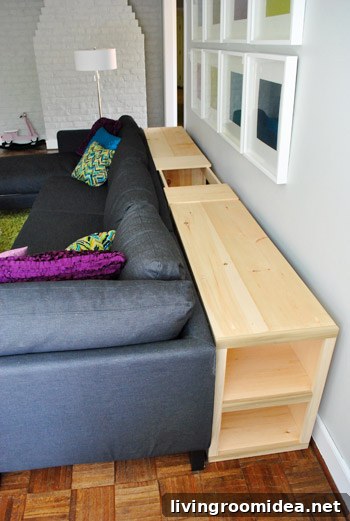
After finishing the two end sections of our three-piece DIY console table (previously described), I moved on to building the middle unit. This center piece will sit hidden between the two ends and between the sectional and the wall, so it could have been a simple platform to support the long tabletop that will span all three units. Instead, we decided to make the middle section useful by building hidden storage into it. A simple sketch helped plan the layout.
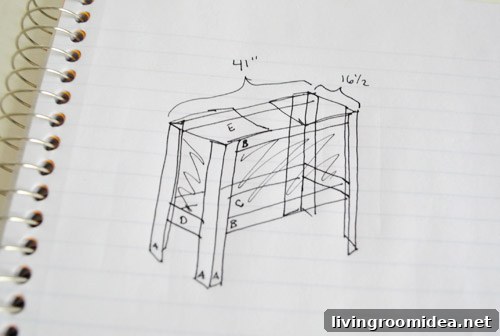
To explain in words: the unit is a 41″ long table with an opening in the top center. Below that opening is a platform shelf that forms the bottom of the storage area. Rather than building full wooden sides for the storage box, we opted to staple fabric around the interior sides to save cost and reduce weight. The result will be a sturdy wooden frame with a solid bottom and fabric walls forming a concealed storage bin.
For materials I gathered a number of 1×4 boards and a 1×12 board. I had some boards cut at the store, then finished the precise cuts at home with my miter saw.
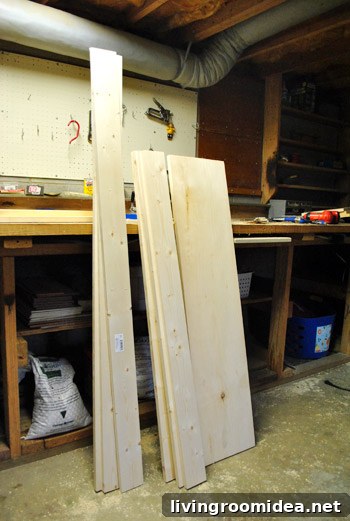
The first step was cutting four 24″ legs. If you cut a 48″ board yourself, remember the saw blade removes material so the two pieces won’t be exactly identical unless you account for the kerf. It’s an easy adjustment, though.
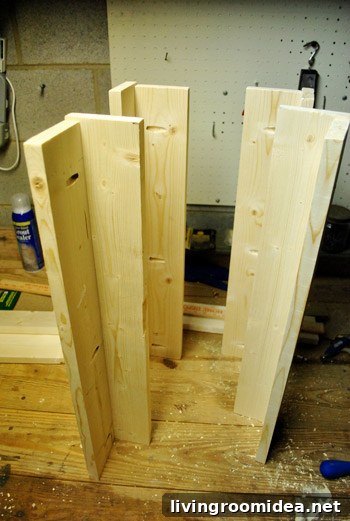
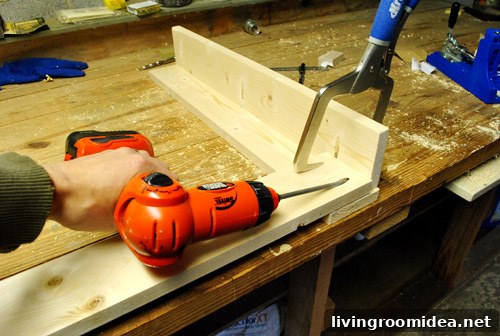
I attached a long top rail to connect two legs, aligning it with the true 24″ leg to ensure everything sat level. I used a pocket-hole jig for the joinery, which is the same system I used on the end pieces of the console table.
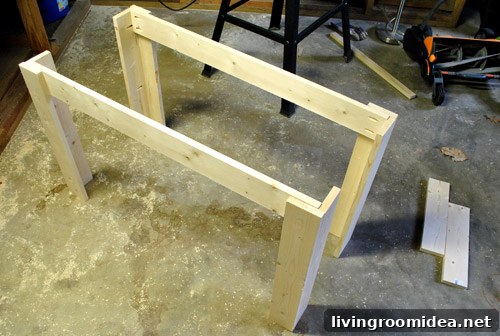
Next I used two shorter boards to connect the opposing leg pairs. These boards also serve as supports for the lower shelf.
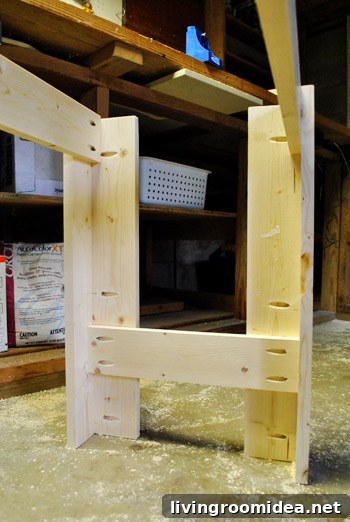
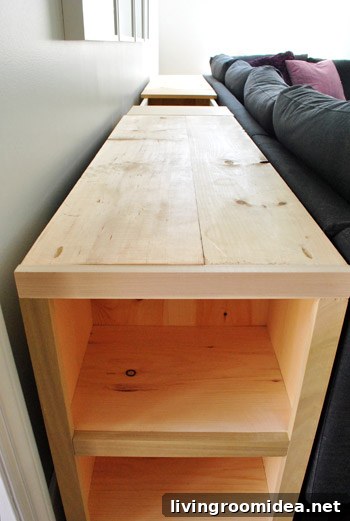
To form the lower shelf I laid two 1x4s flat across the supports. That left a gap in the 16″ width, so I centered a 1×12 on top of those 1x4s to create a solid shelf without spending more on full-width material.
You can see the shelf arrangement in the photo below:
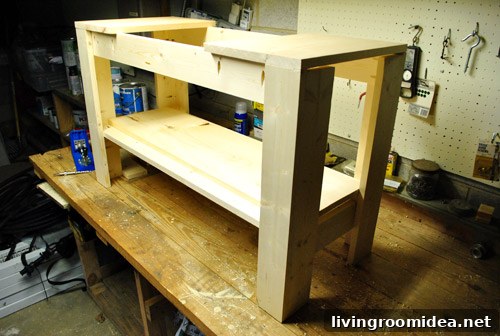
The top is made from leftover 1×12 boards from the end pieces. I attached two top boards on either side and left the central opening we planned for access to the storage area.
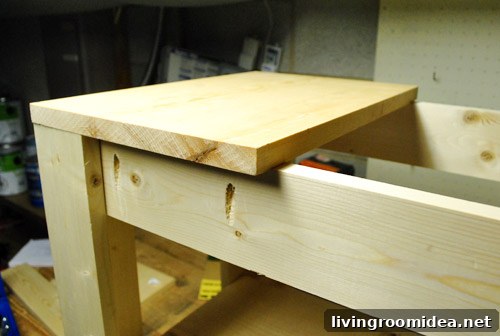
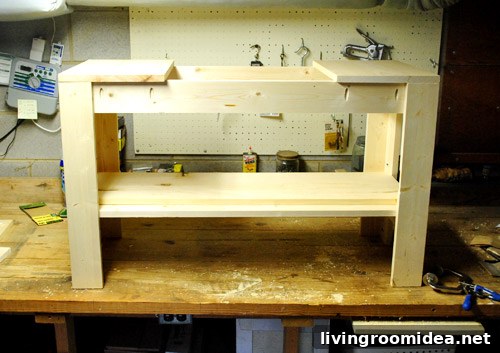
While the center unit isn’t polished yet, once we staple fabric to enclose the storage bin and drop in baskets for organization it will be both practical and unobtrusive. The reclaimed pallet countertop we’ll add across all three consoles will hide these construction details and create a cohesive rustic surface. There will be a removable, flush piece over the storage opening so the compartment is accessible from above when needed.
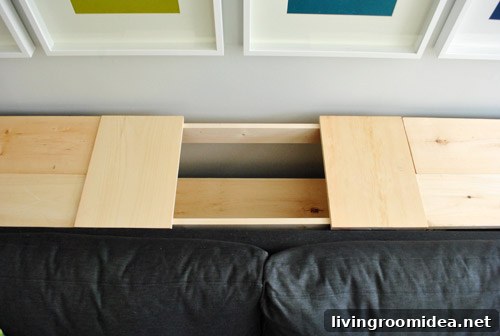
We’ll share how we build the rustic countertop and the removable top piece when we get to that stage, including step-by-step photos once we finalize the plan.
For now, we’ve moved all three pieces into the room even though they still need stain and the final countertop. Seeing them in place was a noticeable improvement. Bringing the console closer to the sectional made viewing the TV easier and helped the room feel cozier. Once we replace the lone floor lamp with two matching table lamps on either end of the long console it will feel more balanced and connected to both the wall and the sofa.
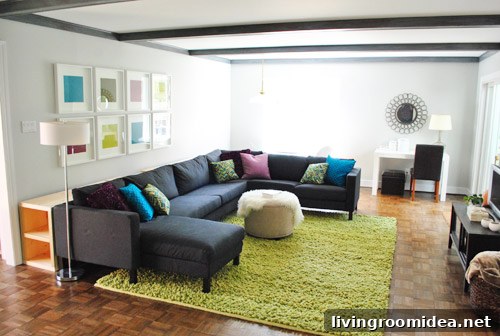
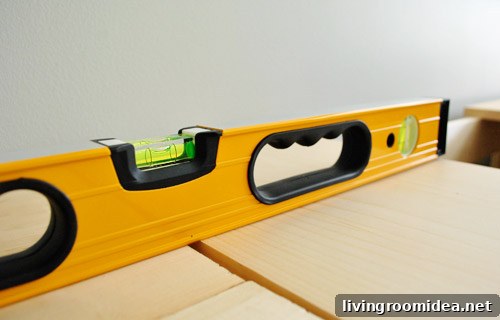
One hiccup: the floor is slightly uneven in spots. The house has some settling that shows through the floor, which made a long span of furniture a challenge to level. After assembling the three units in place there was a small misalignment where two pieces met.
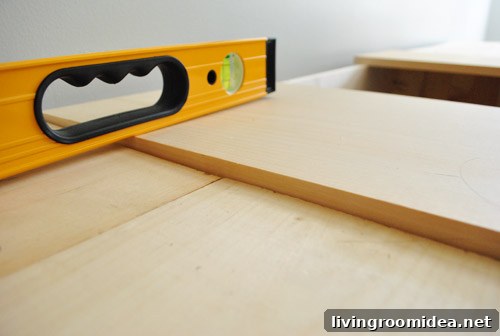
To fix it we installed adjustable leveling feet on several corners. They work like appliance feet: spin to raise or lower each corner until everything is level. I preferred adjustable feet over felt pads because they allow fine tuning.
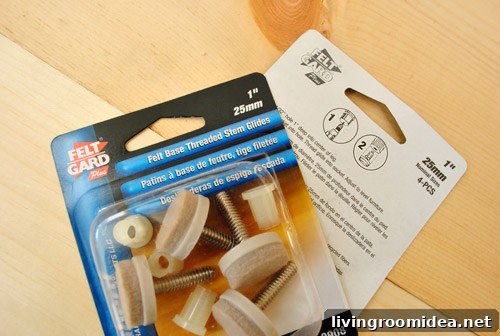
Installation involved drilling a hole in the bottom to accept a plastic guide and then screwing the threaded foot into place. Because the guide hole is nearly 3/8″, I stepped up drill-bit sizes from a small pilot hole to the final diameter to avoid splitting the wood.
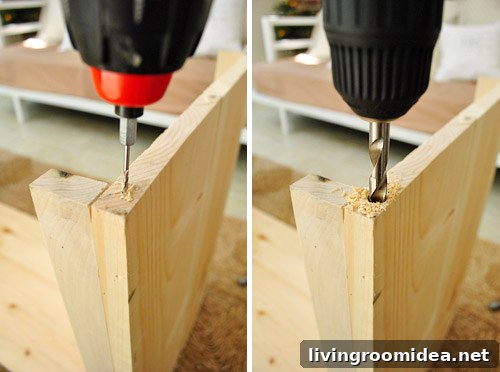
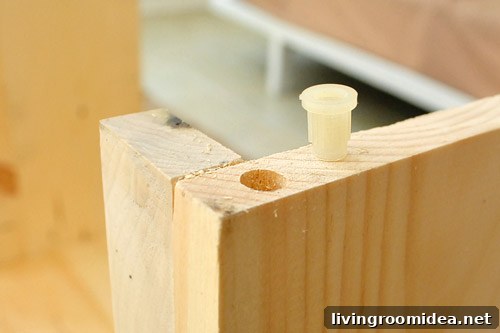
I enlarged the top of the guide hole slightly so the plastic flange would sit flush with the wood. With the padded legs installed, the units looked like this at the base:
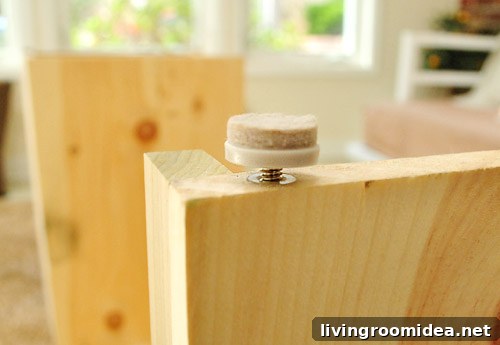
After adding adjustable feet to most corners and a few felt pads where only minor adjustments were needed, the console run became level. Getting everything even was quicker and easier than I expected.
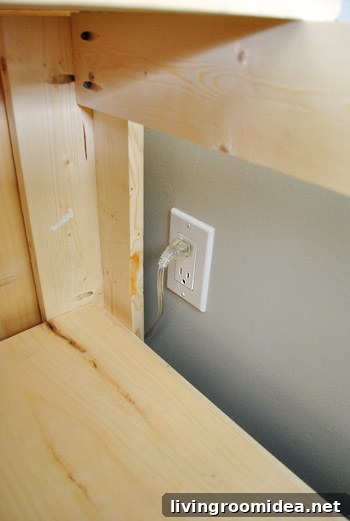
One pleasant surprise: the center unit is positioned so we still have access to the wall outlet behind it, which will be crucial for powering table lamps once they’re installed. That will influence how we staple fabric inside the storage area, since we need to leave a small gap for cords but still prevent remotes or small toys from sliding into the crack between the console and the wall. The baseboard adds a tiny offset that will help with cord clearance.
We’ll tackle the fabric lining, staining, and countertop installation next and document each step with photos. For now I’m enjoying that everything sits level and functions as intended. Small wins add up.