
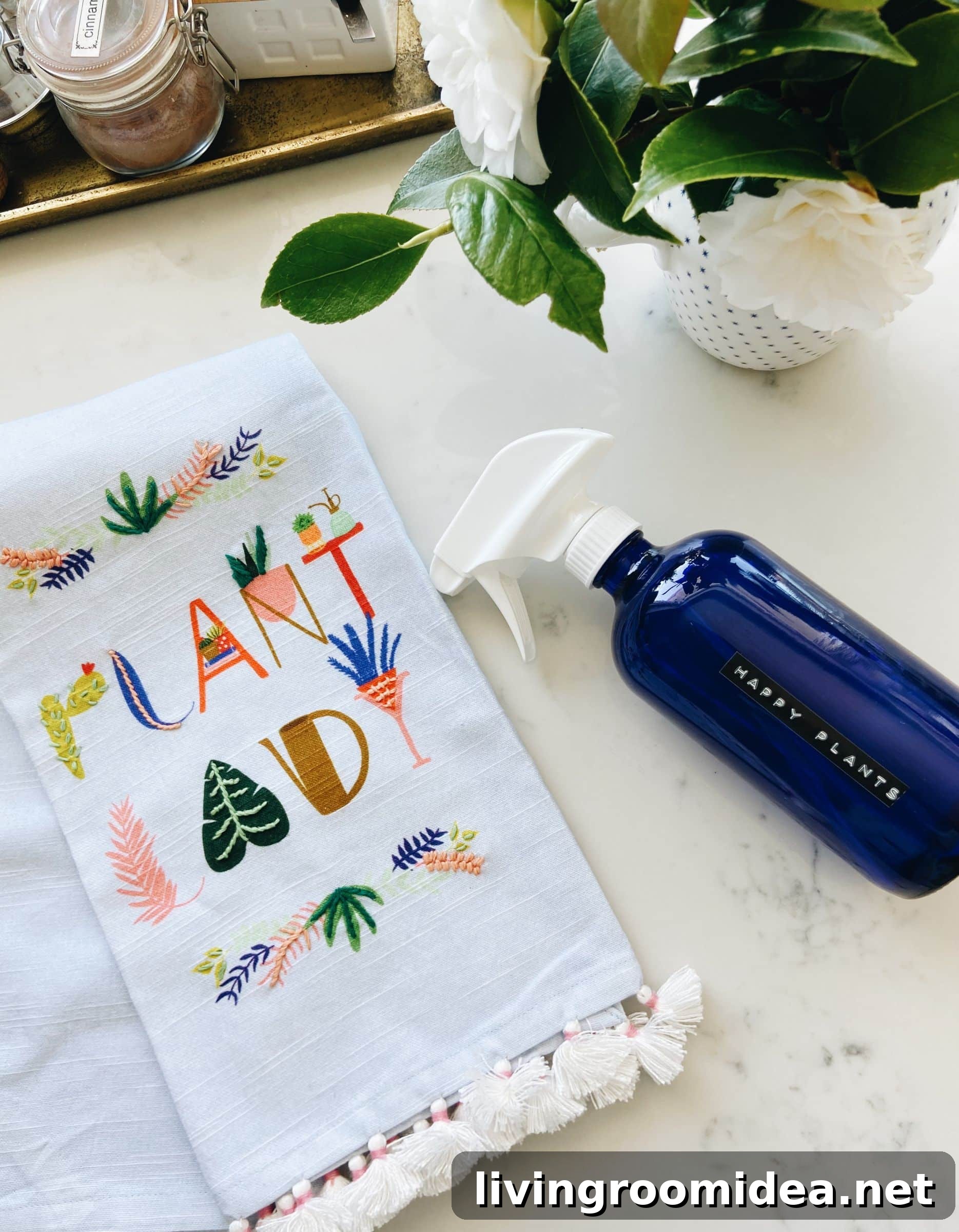
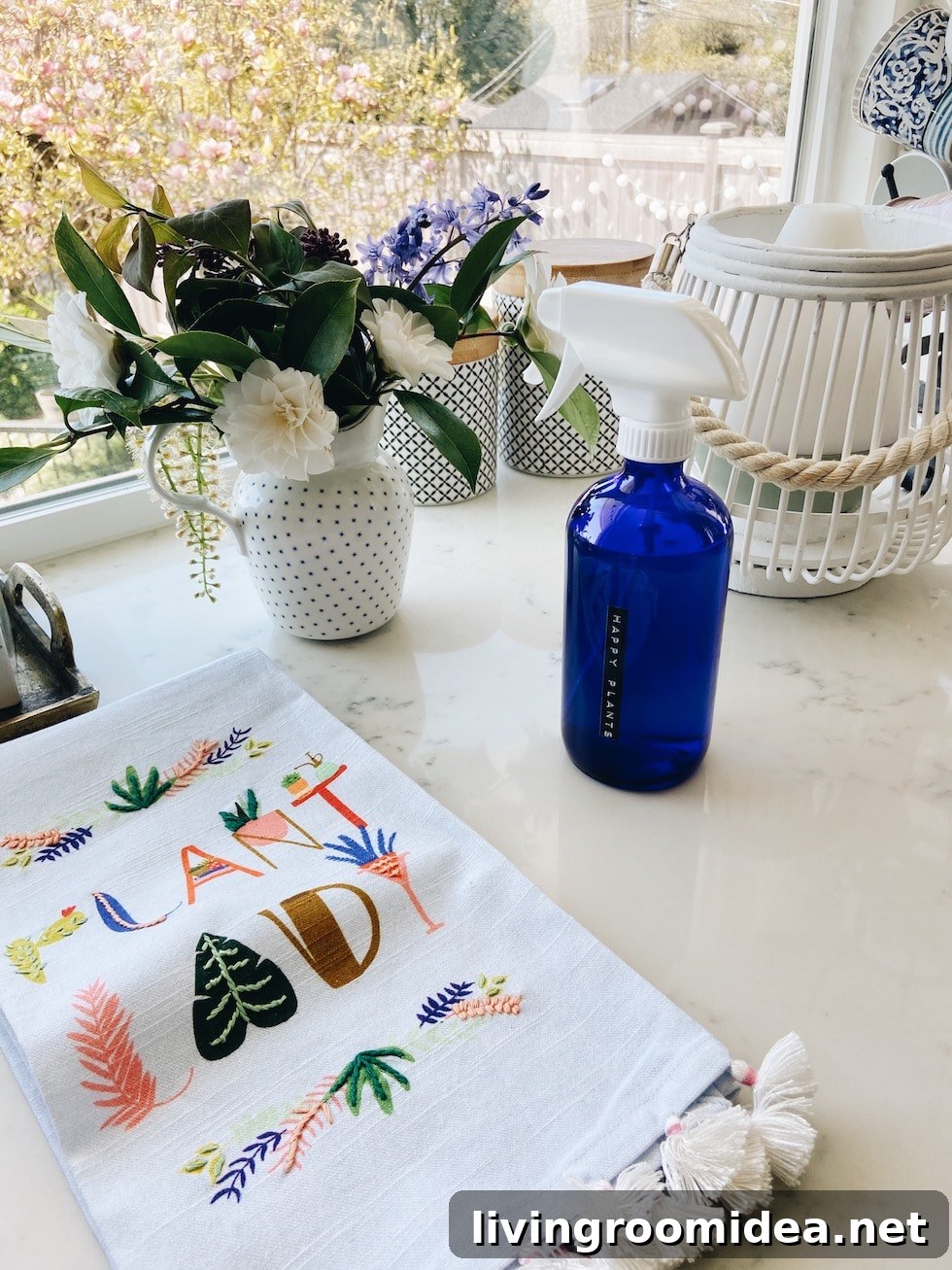
Calling all plant lovers — whether you think of yourself as a proud plant parent or a former plant killer who’s learning the ropes! I used to lose a few plants, but lately I’ve had more successes than failures. Plants need attention and care, and with a few simple rituals you can help them thrive.
I care for both indoor houseplants and my garden with gentle, plant-safe products. That includes a favorite essential oil-based spray I use to keep my fiddle leaf fig leaves clean and glossy. I call it my Happy Plant Spray. I also have a lighter spritz for succulents that keeps them refreshed without overwatering.
Get your happy plant home + garden concentrate here!
Below you’ll find how I use the spray and the simple recipe to make your own. It’s easy, effective, and safe for plants, people, and pets when made with clean, plant-based ingredients.

There’s growing evidence that many conventional cleaning products can harm respiratory health over time. Studies spanning decades suggest repeated exposure to common cleaners can have serious long-term effects. Because of personal health concerns years ago, I switched to carefully chosen, plant-based products and felt a meaningful improvement in my wellbeing. Choosing safer cleaners reduces risk for everyone in the home.
Many store-bought products include harsh chemicals like ammonia or chlorine and use vague terms such as “fragrance” or “natural” without disclosing what’s actually inside. That makes it hard to know what you are bringing into your home. I now prefer brands that fully disclose ingredients and maintain strict quality controls.
Research highlights on cleaning products and respiratory health:
- Large long-term studies followed thousands of participants over decades, testing lung function regularly.
- Both sprays and liquid cleaners were included, and results were compiled by researchers from multiple countries.
- Women experienced greater declines in lung function, likely reflecting higher household cleaning exposure.
- Regular home cleaning caused similar respiratory declines as occupational cleaning in professional cleaners.
These findings remind us that many cleaning products can cause harm whether they’re sprayed or applied as liquids. Our skin and lungs are both routes of exposure, so choosing safer alternatives matters.
How to choose safer products
Avoid products that list vague “fragrance” ingredients. Instead, look for transparent labels that list specific components and prefer companies that share sourcing and testing practices. It’s worth doing a bit of research up front to trust the brands you use daily.
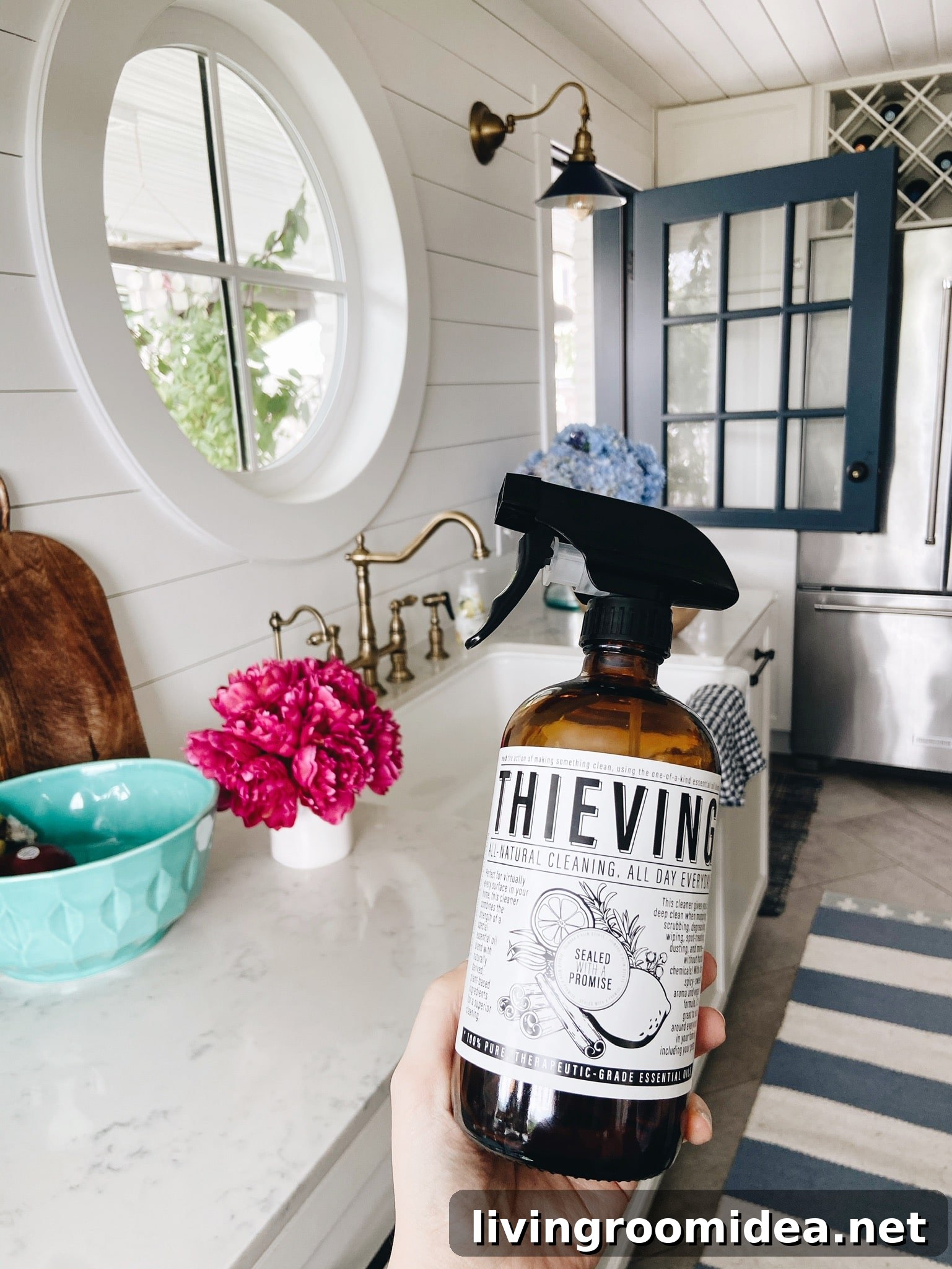
After researching options, I started using a plant-based cleaner I trust for both household cleaning and plant care because of its ingredient transparency and consistent results. It’s sold as a concentrated formula you dilute yourself, which is economical and versatile. One small concentrate bottle can make many spray bottles of cleaner, and you can use it on counters, fabrics, outdoor furniture, and even plant leaves.
Using a gentle, plant-based concentrate for cleaning keeps the home fresh without harsh residues on surfaces or on the plants you love. I’ve used it on slipcovers, rugs, kitchen surfaces, bathrooms, windows, and patio furniture — and it works well on fiddle leaf fig leaves too.
My fiddle leaf fig survived a tough trim and is now thriving after regular misting and occasional leaf cleaning. Simple care — consistent watering, bright indirect light, and occasional dusting — keeps it healthy. A little leaf cleaning makes a big visual difference.
My Happy Plant Spray recipe is minimal and easy to prep.
Happy Plant Spray — Simple Recipe
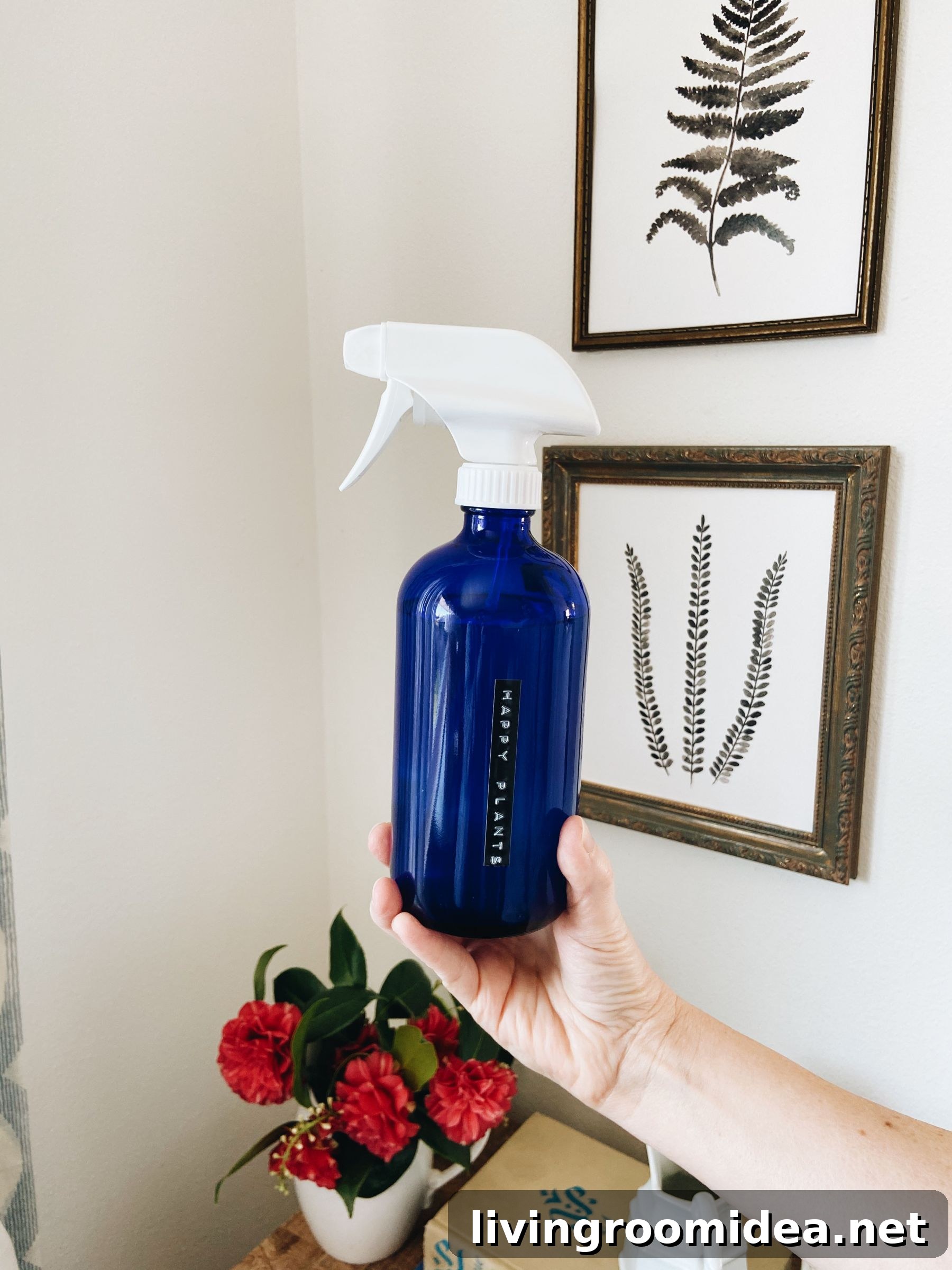
Fill a 16-ounce spray bottle with water and add about a capful of a plant-based household cleaner concentrate. Shake gently and mist plant leaves to remove dust and add shine. This same diluted mix works for general household cleaning as well — countertops, sinks, and surfaces — making it a multipurpose option that reduces the need for multiple products.
I water my fiddle leaf fig about every 10 days and mist the leaves between waterings. It prefers bright, indirect light and minimal fussing. For succulents, use a separate, lighter spritz: a few drops of tea tree, purification, and lavender oils diluted in water can freshen without overwatering. Succulents dislike excess moisture, so keep the mist light.
I also use natural oils in the garden to help repel pests and to wash produce. A plant-safe fruit and vegetable wash removes residues effectively without worrying about toxic chemicals on food. Sprays for specific pests (like an aphid spray I’ve shared elsewhere) are simple to make and can be gentle alternatives to synthetic pesticides.
Making your own plant sprays is straightforward and allows you to control ingredients. Whether you’re spritzing fiddle leaf fig leaves or refreshing succulents, gentle, plant-based ingredients keep your home and garden healthy.
+ + + + + + + + + + + + + + + + +
How to get plant-based household concentrates and essential oils:

You can order plant-based household cleaners, essential oils, and other toxin-free products from reputable suppliers. Buying concentrated cleaners allows you to dilute exactly what you need, which is economical and reduces packaging waste. If you already use a trusted brand, stick with it; if you’re exploring options, look for full ingredient transparency and quality guarantees.
If you have questions about which products to choose or how to dilute concentrates safely for plants and home use, feel free to reach out to a trusted source or retailer for guidance. Many brands provide detailed usage instructions and tips for household and garden applications.
FAQ & Video on Ordering:
When choosing products, prioritize transparency, reputable sourcing, and good testing practices. These factors help ensure you bring cleaner, safer options into your home and garden. If you’d like tips on mixing sprays, using oils safely, or caring for specific plants, I’m happy to help.
Related Plant Post:
A Love of Organic Gardening