
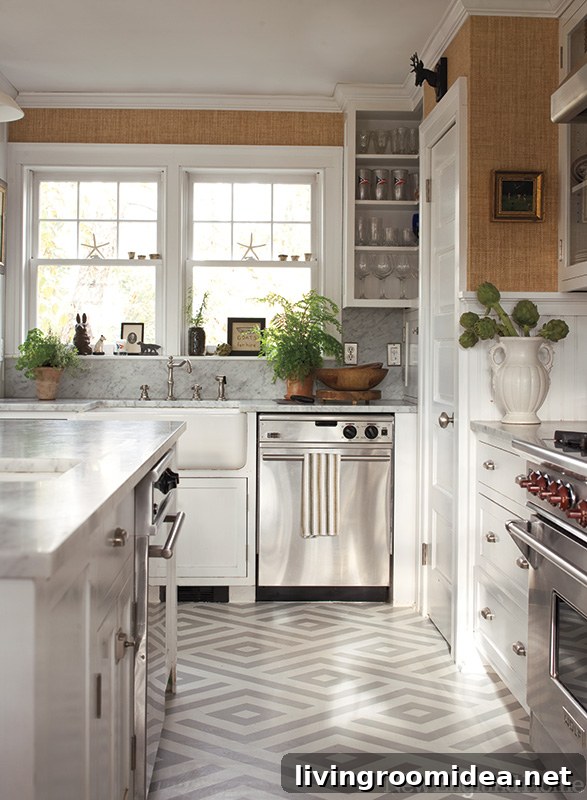
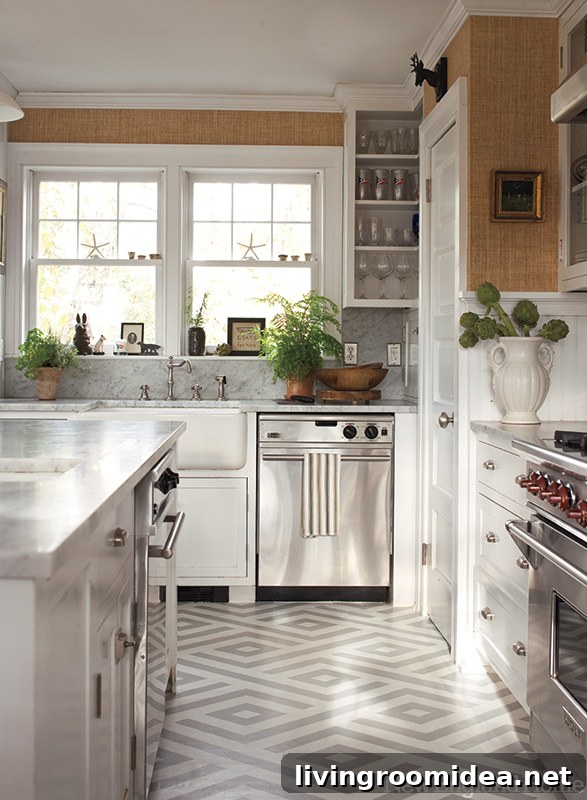
 New England Home
A patterned floor makes a bold, joyful statement. Graphic floors inject energy and personality into a room in a way that plain surfaces rarely do. In kitchens and bathrooms especially, a distinctive floor can become the focal point, balancing function and style. While some may worry about tiring of a strong pattern, choosing something thoughtfully scaled and in harmony with the rest of the design often keeps the look fresh for years.
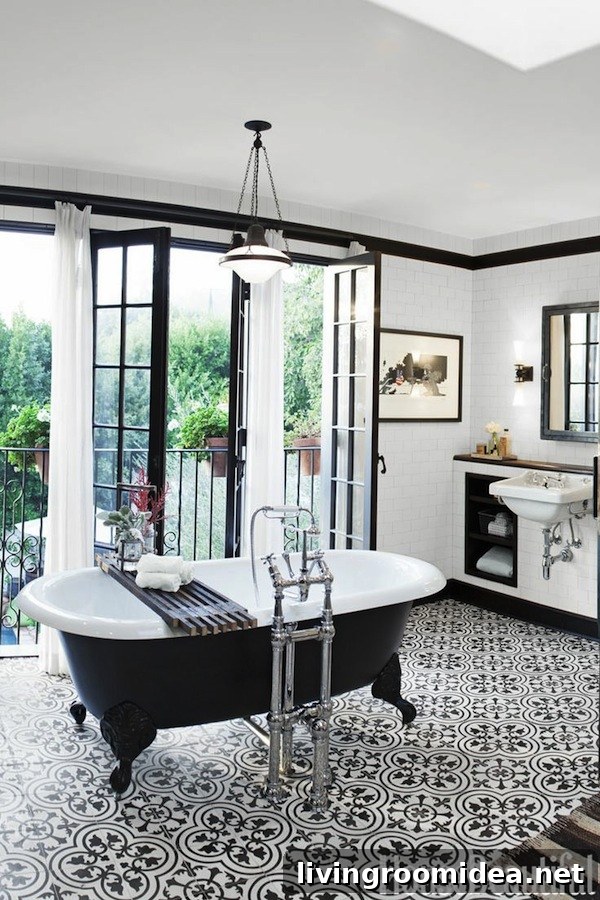 House Beautiful
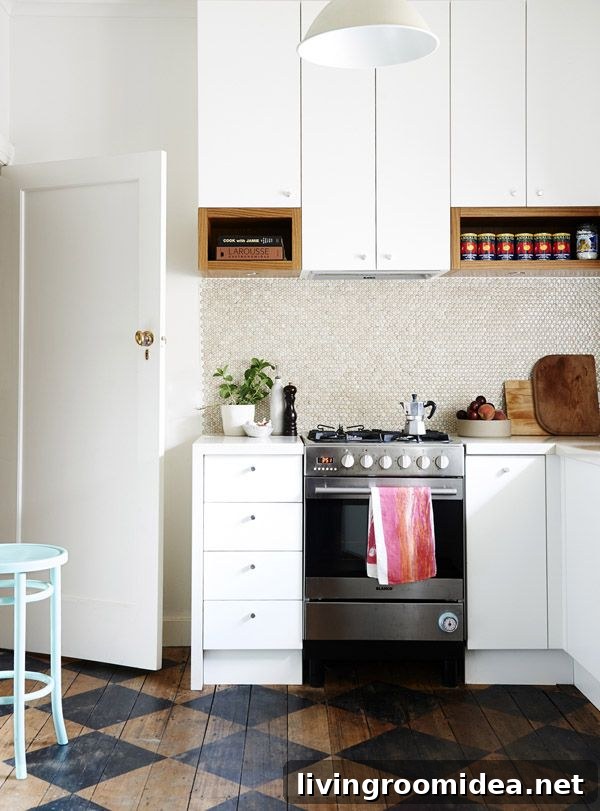 The Design Files — Designed by Jasmine McClelland
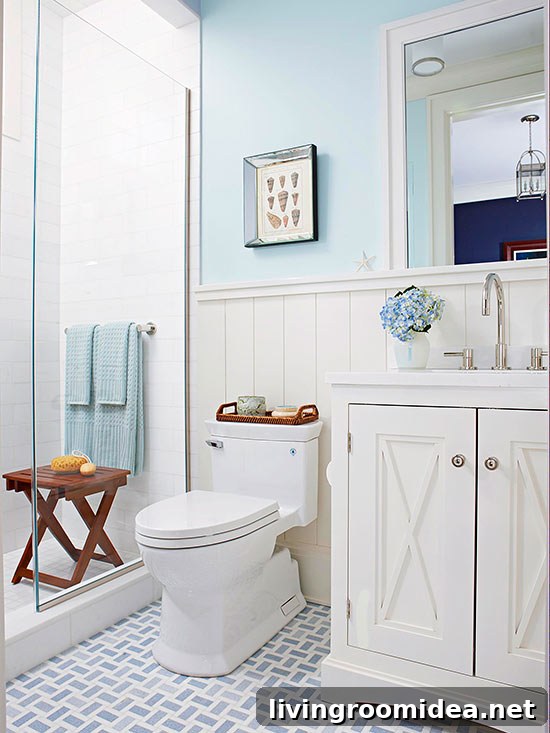 BHG
BHG
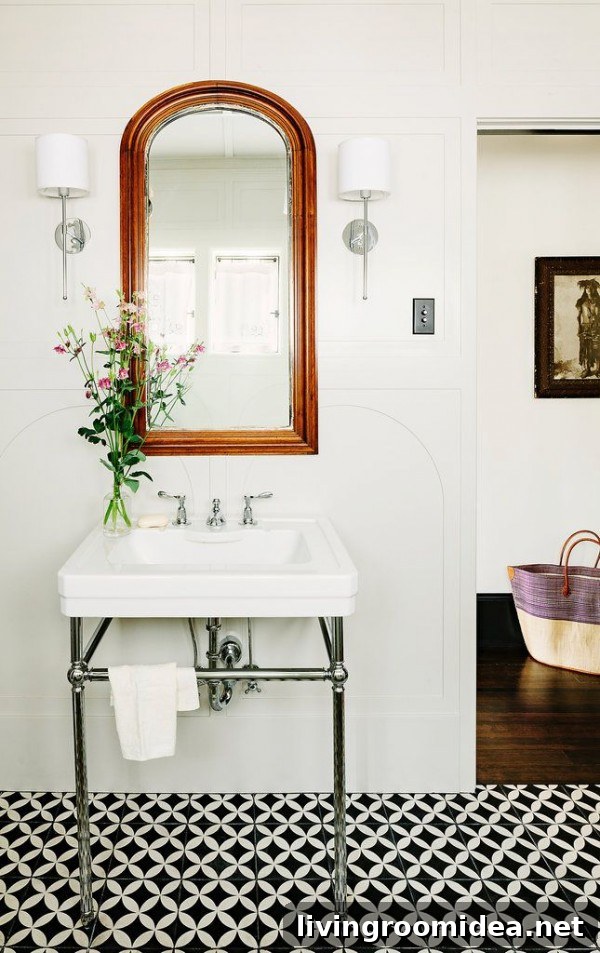 NY Times, Designed by Jessica Helgerson, Photos by Lincoln Barbour
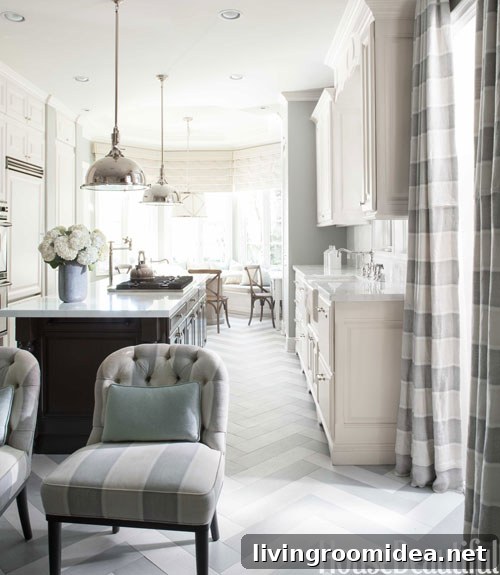 Mary McDonald – House Beautiful
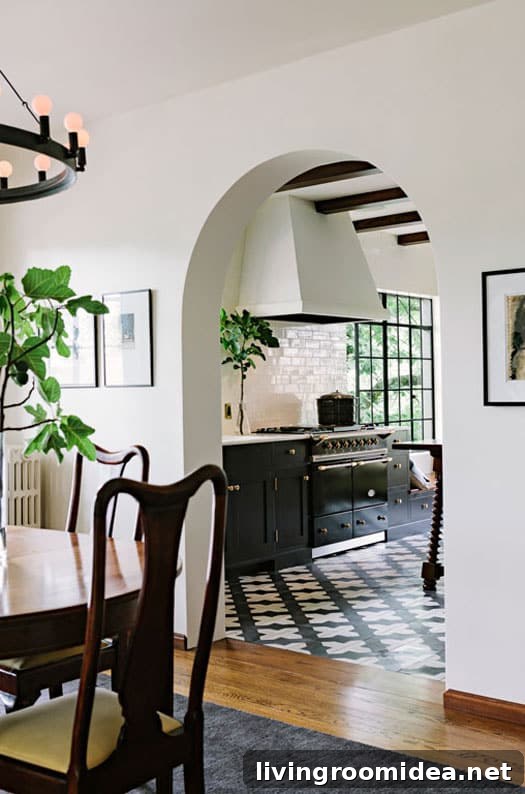 Designed by Jessica Helgerson, Photos by Lincoln Barbour
When considering a patterned floor, think about scale, color palette, and the surrounding finishes. Larger-scale patterns can make a small room feel more expansive when used with a restrained color scheme, while smaller, busy patterns add texture and visual interest to bigger spaces. Neutral walls and simple cabinetry let a lively floor shine without competing for attention. Alternatively, pairing a graphic floor with complementary textures—like natural wood, woven fabrics, or matte metals—creates a layered, intentional look.
Materials matter as much as pattern. Porcelain and ceramic tiles offer durability and an almost endless range of printed and hand-crafted designs. Cement and encaustic-style tiles deliver a vintage or artisanal feel, and properly sealed they’re practical for kitchens and baths. Wood or wood-look patterns give warmth and a more traditional vibe; when laid in chevrons, herringbone, or diamond patterns, they achieve a custom, elegant appearance. For high-traffic areas, choose finishes that resist wear and are easy to maintain.
If you’re unsure about committing to a bold floor throughout an open plan, consider limiting the pattern to a single room or creating defined zones—an inset patterned rug made from tile, or a bordered field of pattern in an entry or kitchen island area. This approach delivers striking visual impact without overwhelming the home’s overall aesthetic.
Lighting also influences how a pattern reads in a space. Natural light softens high-contrast designs and reveals subtle color variations, while directional artificial light can emphasize texture and shadow. Test samples in the room at different times of day to see how the pattern and colors react to your home’s lighting conditions.
Above all, a patterned floor is a personal choice. If it excites you and reflects your style, it’s worth the leap. With thoughtful selection of scale, material, and coordinating finishes, a graphic floor can be a lasting, character-filled feature that transforms everyday rooms into memorable spaces.