In 2008, my friend and talented designer Joni from the celebrated Cote de Texas blog wrote this thoughtful piece for The Inspired Room. It is with great sadness that I share she passed away unexpectedly in October 2023. Her loss is deeply felt by family, friends, and the design community.
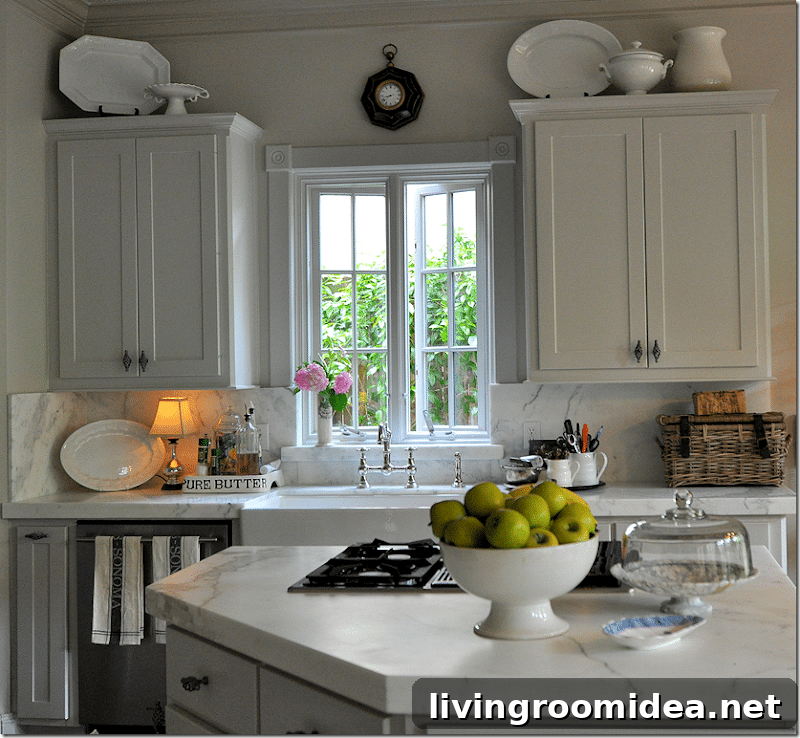
The original photographs no longer appear with the post, but Joni’s wisdom remains timely and inspiring. I’m sharing her writing again here for those who loved her work and for anyone who appreciates good design. I’ve added one of her beautiful kitchen photos from a past home to the top of this post to honor her memory.
On a personal note, Joni and I stayed in touch through the years and into recent weeks. Our friendship began after a post I wrote about Magazine Cover-itis — a lighthearted obsession we both recognized in ourselves. I was humbled when a designer of her caliber commented on my blog, and I soon discovered how genuinely kind and thoughtful she was.
Over time she would message me about my home, recall details she admired from earlier posts, or simply share a memory. I was always touched that she noticed and took the time to say so. Recently she told me on Instagram how much she felt our design tastes aligned; she loved our home and felt we had the same sensibility. The feeling was mutual. I admired her keen eye and trusted taste.
We were different people in many ways, but she sought out common ground and used it to build connection—a rare and beautiful quality. I’m so grateful she became my friend and I will miss her dearly.
* * * * * * * * * * * * * * * *
Below is a post written by Joni of Cote de Texas for The Inspired Room in 2008
Ever since I was a young girl I’ve been fascinated by interior design. I remember my older cousin bringing me design magazines when I was seven, and even then my family recognized that I leaned toward this world. I can’t fully explain it; the love of design always felt like a part of me. When I was eight, my parents bought a lot and built a custom home. I took part in the process and helped design my bedroom—choosing a lilac sink and a lilac accent wall behind the beds. Back then the greatest joy was a trip to a furniture store with my mother. It felt like pure bliss.
For a long time I thought I wanted to be an architect and I sketched floor plans of my dream houses endlessly. I was captivated by a house I’d seen in a magazine—a DuPont-built home in Delaware with a long central hall from which rooms flowed. That layout stayed with me for years, and many of my drawings echoed that scheme. Even today I admire center halls, though I don’t live in one.
My dream home now isn’t limited to one architectural style. I’m drawn to many different house types: a French chateau with rooms enfilade, a Spanish mission with white stucco and iron lighting, a charming Cape Cod with shingled roofs and dormers, the Texas Hill Country home with limestone and tin roofs, or a rambling English country house built up through generations. How could I choose just one?
Choosing a favorite furniture style is easier. If it’s old French, I adore it. Yet I’m also smitten by antique Swedish pieces in weathered gray, the heavily carved Spanish furniture, and the occasional chinoiserie accent that enlivens a room. English upholstered furniture with loose slips feels especially cozy. Ultimately, what I love most is great design—where form, proportion, and detail come together.
An ugly room makes me uneasy. My mind immediately starts to redesign and edit. But a beautifully composed room exhilarates me: my eye moves from detail to detail, and I feel curious and joyful. I ask who designed it, where the owner shops, whether pieces are antique or reproduction, and what fabrics were used. A well-done room sparks desire—I want to live there, to understand how it was created.
To me, beauty in a room comes from thoughtful composition. Furniture placement should feel intentional; chairs and sofas must relate to each other so the room feels balanced. Fresh, clean paint and well-maintained surfaces make a big difference. Soft, layered lighting—lamps and sconces—creates atmosphere; harsh overhead lighting should be minimal. An area rug should anchor the main seating group, especially over wood or tile floors, and seagrass rugs often work beautifully in formal settings. Natural fabrics—cotton, linen, silk—feel right. Artwork should hang at eye level and relate to surrounding furniture rather than float above a sofa. Mirrors, especially older glass, are wonderful substitutes for art. Shelves should be arranged with restraint and balance, avoiding clutter. Draperies add refinement and warmth. Small touches—fresh flowers or a lit candle—bring life. Above all, a room should be inviting and comfortable. These elements together create beauty, no matter the style.
When I work with clients, I try not to impose my personal preferences, though it can be a challenge. Some clients know exactly what they love, and those projects are a delight: shopping together and sharing a passion for beauty is a true pleasure. I recall a recent project where my client and I both loved antiques and French furniture. As the room came together, everything fit perfectly—the wall color, the texture of linen, the richness of chintz, the sheen of an antique mirror, the curve of chair legs, the glaze on porcelain, and the smell of new seagrass. The room’s harmony moved me emotionally; it was so beautiful I could have cried. That reaction—an emotional response to a space that feels right—is one of the greatest rewards of design.