
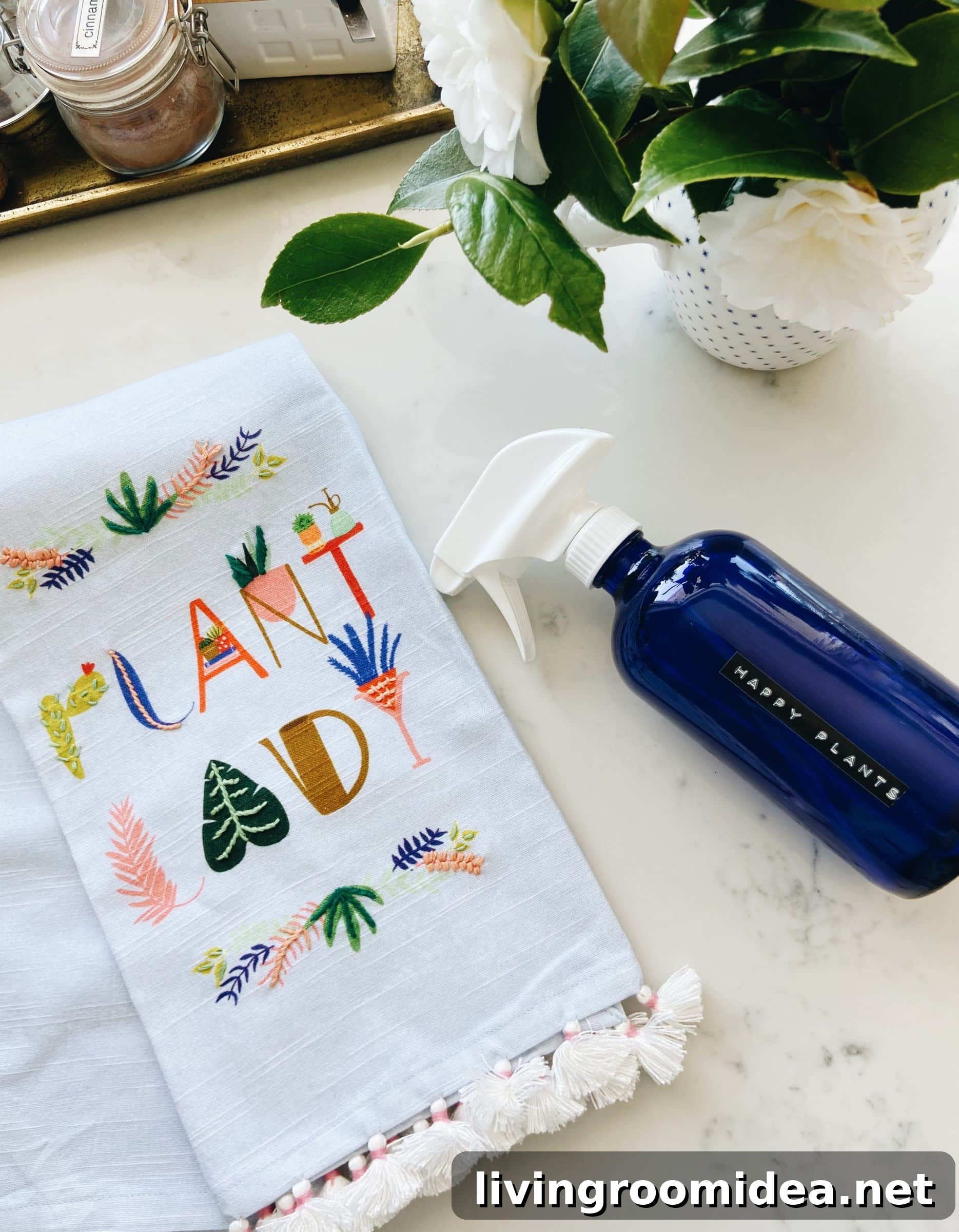
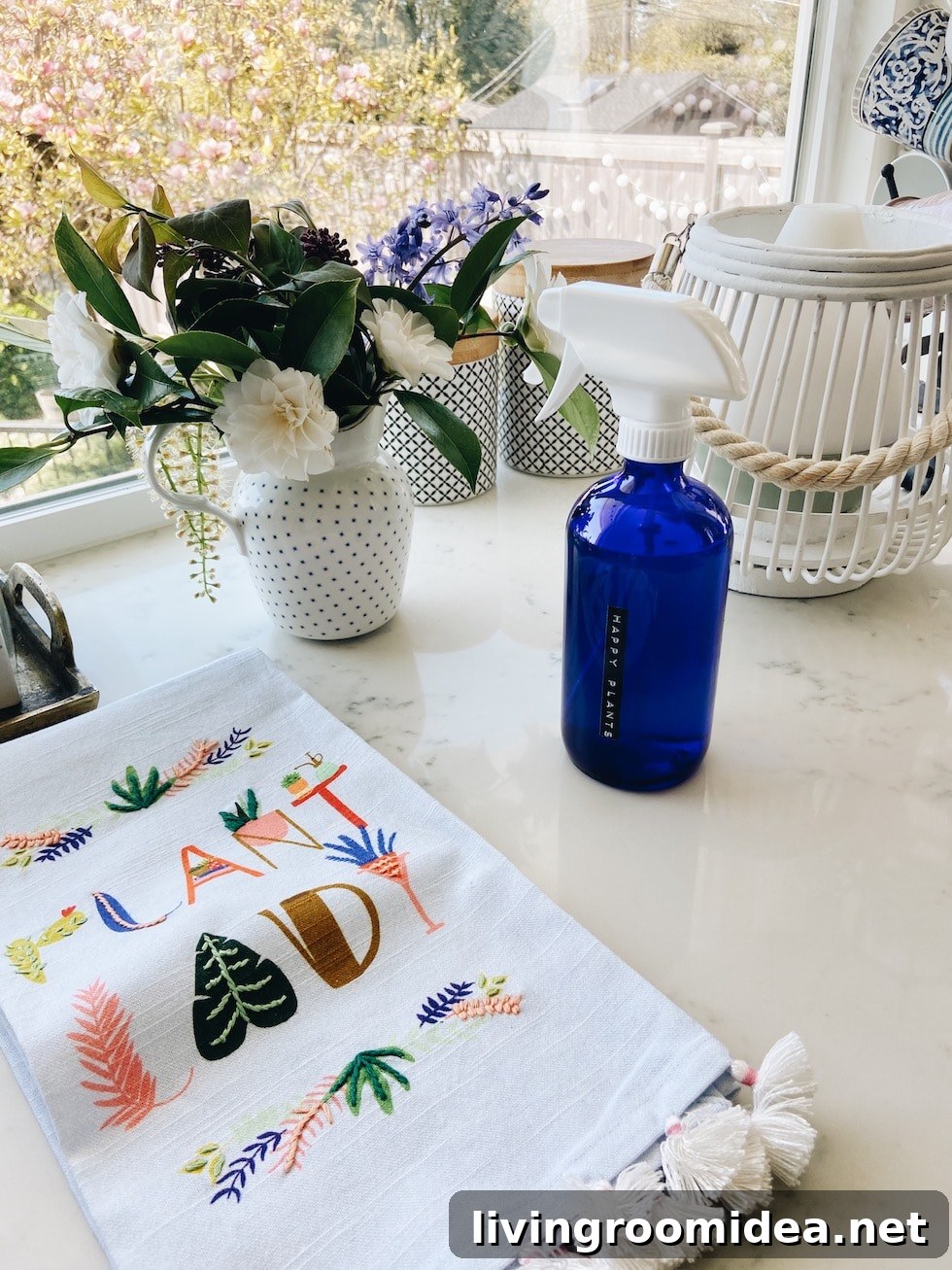
Calling all plant lovers! Whether you’ve had a few casualties or you’re a proud plant parent, nurturing houseplants takes a little knowledge and consistent care. I used to consider myself a “plant killer,” but over time I’ve learned what plants need and now have far more successes than failures.
Plants need TLC, just like people do.
Get your happy plant home + garden concentrate here!
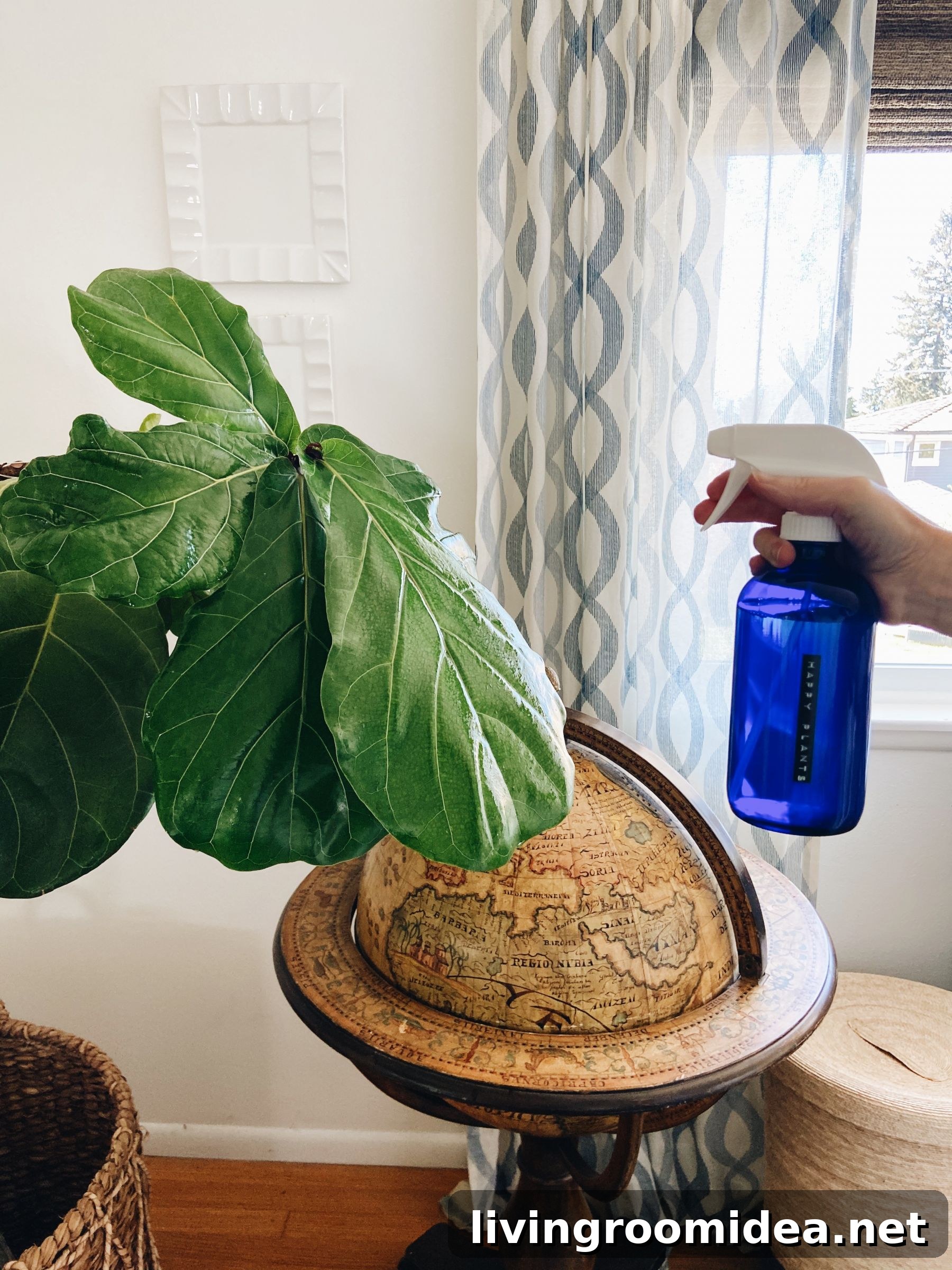
As promised, today I’m sharing the essential oil spray I use to keep my fiddle leaf fig leaves shiny and healthy (I call it my Happy Plant Spray), along with a gentler spritz that works well for succulents. Below you’ll find the recipe and simple directions for both.
You’ll find the details on how to make the spray and use it in this post.
I love having thriving houseplants, a lush garden, and a clean home. They make life happier. I prefer to use plant-based, non-toxic solutions for cleaning and plant care so my family, guests, pets, and plants are all safe. For our household routines we now rely on safe, plant-based ingredients and pure essential oils.
The Happy Plant Spray I use on my fiddle leaf is the same plant-based cleaner I use around the house. It’s gentle, effective, and safe for plants and people.

Research spanning decades shows that many conventional cleaning products can harm respiratory health over time. Years ago I experienced health issues related to chemical exposure, which led me to rethink what I bring into our home. Choosing gentler, transparent products has made a meaningful difference to my well-being.
Even if you don’t notice immediate symptoms, repeated exposure to toxic cleaners can be harmful. Reports of accidental poisonings from household products are all too common, and avoiding unnecessarily harsh chemicals reduces that risk.
Why are toxic household products still common?
Many grocery-store cleaners contain harsh chemicals like ammonia and chlorine compounds. Labels can be misleading: terms such as “fragrance,” “natural,” or “plant-based” may hide a mix of undisclosed ingredients. Because manufacturers aren’t always required to list everything, it’s important to choose brands that fully disclose ingredients and whose standards you trust.
Highlights from a peer-reviewed study on cleaning products and lung health:
- The study followed over 6,000 people for about 20 years, tracking lung function over time.
- Participants used both spray and liquid household cleaners.
- Researchers regularly tested lung capacity and compiled results from teams across multiple countries.
- Women were affected more than men, likely because they more often perform household cleaning tasks.
- Home cleaning had similar long-term effects on lung health as occupational cleaning.
The study found that liquid cleaners can be just as harmful as sprays. Our skin and lungs are both routes of exposure, so choosing truly safe products matters.
How do you know what’s safe?
Avoid products that list only “fragrance.” That term can cover many undisclosed chemicals. Look for brands that list all ingredients and have transparent sourcing and testing practices. It takes some initial research, but once you find trustworthy products, it’s worth it for the peace of mind.
After researching brands and ingredient standards, I began getting household and personal care products from a company whose transparency and quality I trust. Choosing a reliable source made it easier to replace multiple cleaning products with a single, versatile, plant-based concentrate.
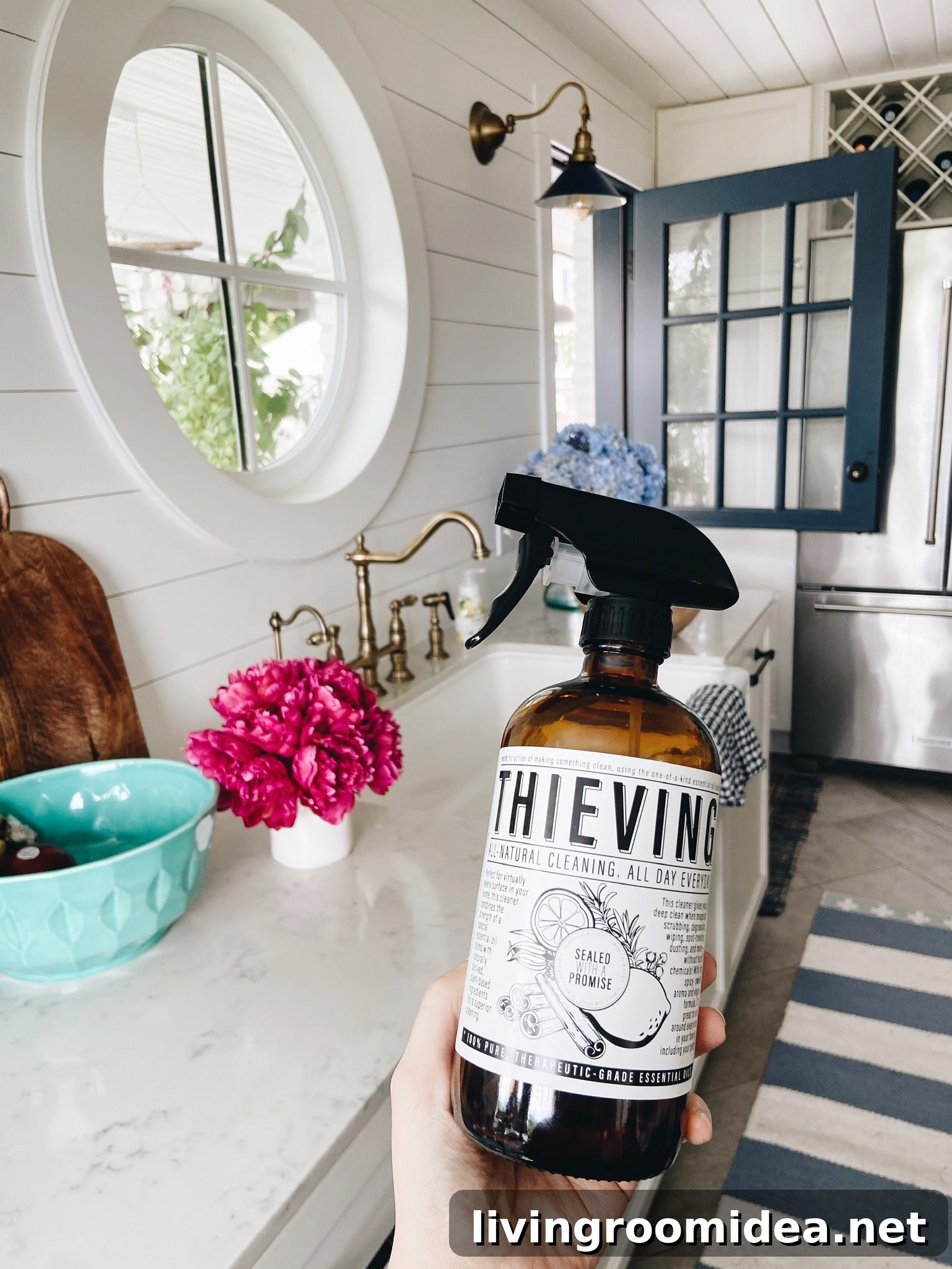
One concentrate I use cleans the whole house and doubles as my Happy Plant Spray. It’s sold as a concentrate you dilute into bottles of water, making it economical and versatile.
Not only does this plant-based cleaner work well, I appreciate that it’s gentle for our family and our plants.
I use the plant-based cleaner around the house on slipcovers, rugs, countertops, patios, and yes—on plant leaves. It removes dust and helps leaves look healthy and vibrant. After trimming and caring for my fiddle leaf fig, it rebounded and is now thriving.
I still water the fiddle leaf fig regularly, but in between waterings I mist the leaves to remove dust and keep them glossy. It prefers bright, indirect light and minimal fuss—mostly water and a light mist now and then.
My Happy Plant Spray — Simple Recipe:
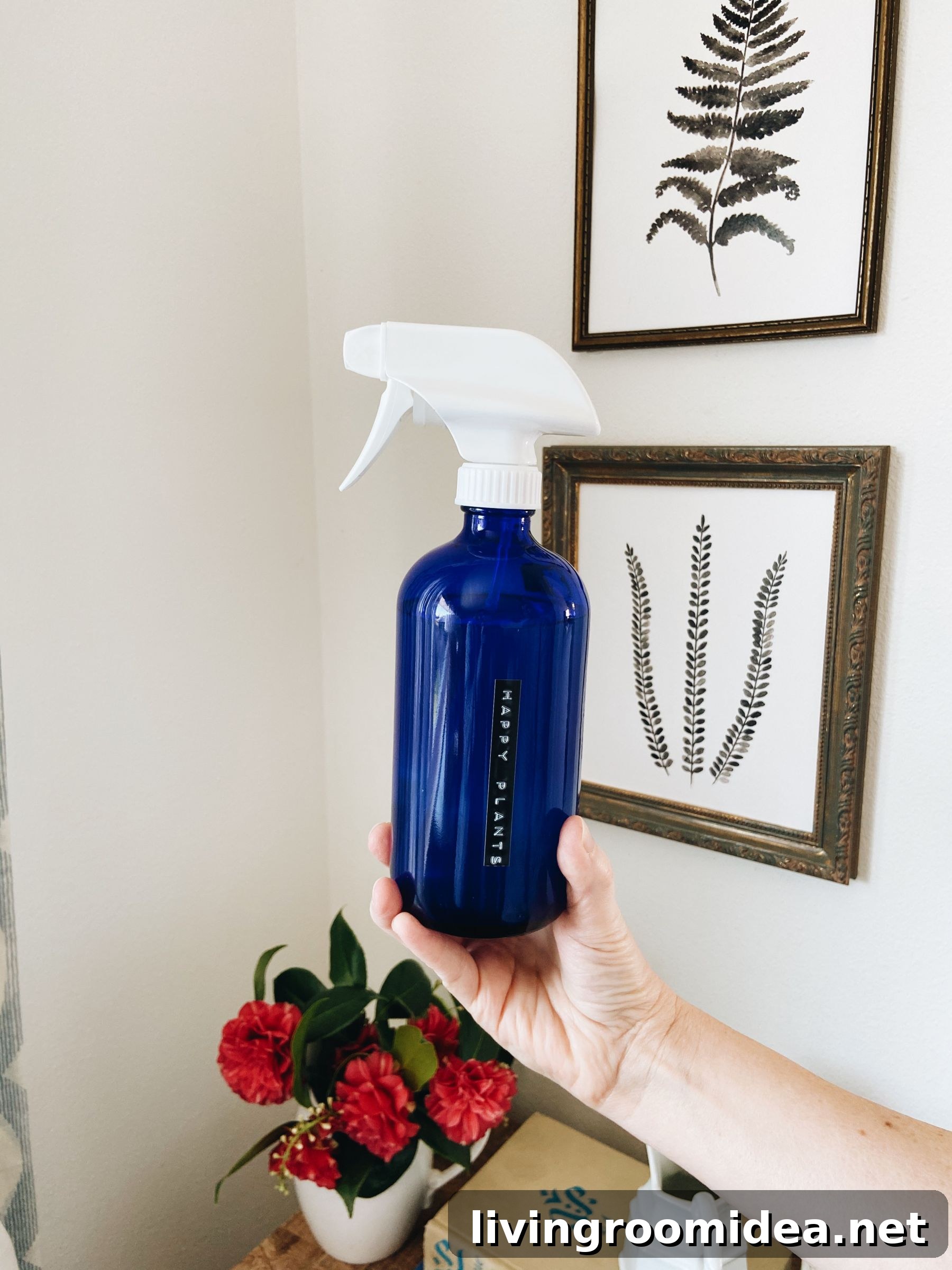
For a 16-ounce spray bottle: add about a capful of the plant-based household cleaner concentrate to the bottle, then fill the rest with water. Shake gently and mist leaves to dust and refresh them. This is the same safe cleaner I use throughout the house.
I usually mist my plants between regular watering sessions (the fiddle leaf gets watered roughly every 10 days). Misting helps maintain leaf health and can brighten the plant’s appearance.
For succulents, use a much lighter spritz. I mix a small spray for succulents with a couple drops of Tea Tree, Purification, and Lavender in water. Succulents don’t like excess moisture, so only a brief mist is needed to freshen them.
I also use essential oil blends in the garden to help deter pests and to wash produce safely. Using plant-based products for produce washing and garden care gives me confidence about what ends up on our food.
Making Happy Plant Sprays is easy, economical, and a gentle way to keep your plants and home healthy. It feels great to care for your living spaces without relying on harsh chemicals.
+ + + + + + + + + + + + + + + + +
How to get your home + garden household cleaner and plant-based products:

You can order the plant-based household cleaner, essential oils, and other toxin-free products from brands that disclose ingredients and maintain high quality standards. If you already use a supplier account or membership, check product details and sourcing to be sure it meets your expectations.
If you need help choosing safe products, ask questions about ingredient disclosure, testing practices, and sourcing. Those are the most important things to consider when building a safer home-care routine.
FAQ & Video on Ordering:
If you’d like product recommendations based on transparency and purity, look for companies that publish full ingredient lists and describe their sourcing practices. When you find reliable sources, you can simplify your cleaning routine with fewer, versatile products that are safe for people and plants.
If you have questions about using these plant-based cleaners or making plant sprays, please reach out. I’m happy to share tips, recipes, and practical advice from my experience to help your houseplants and home thrive.
Related Plant Post on The Inspired Room:
A Love of Organic Gardening