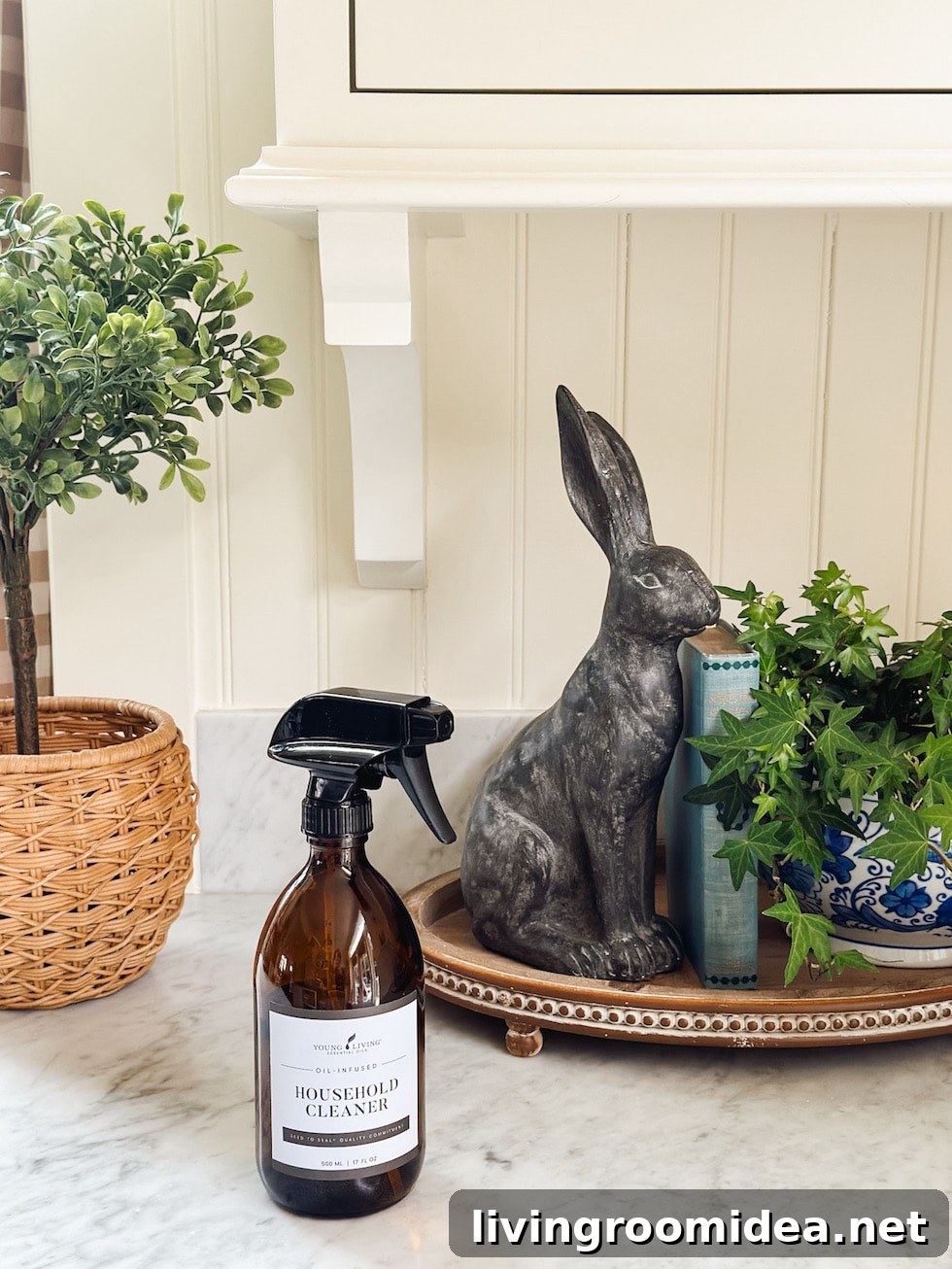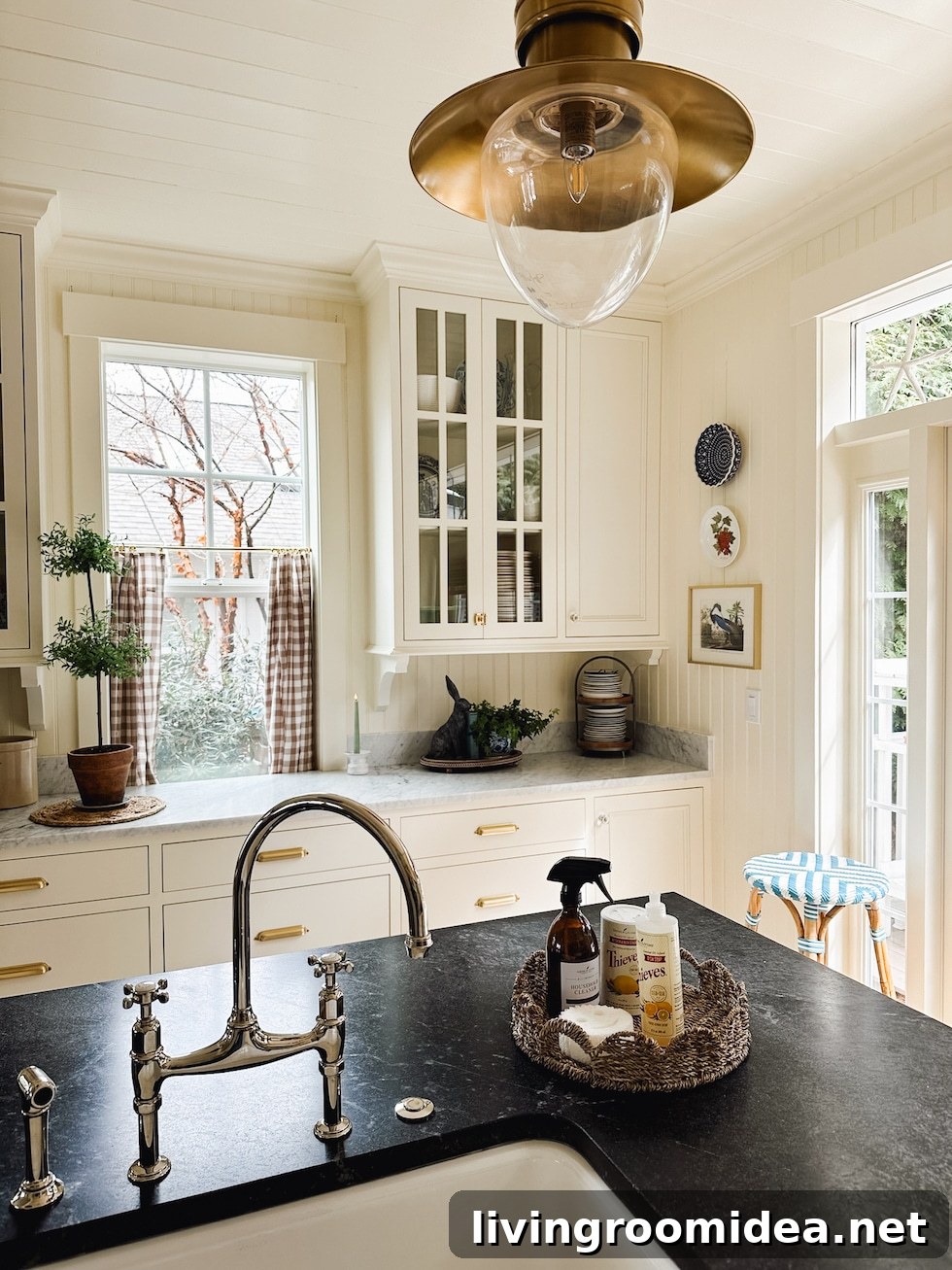
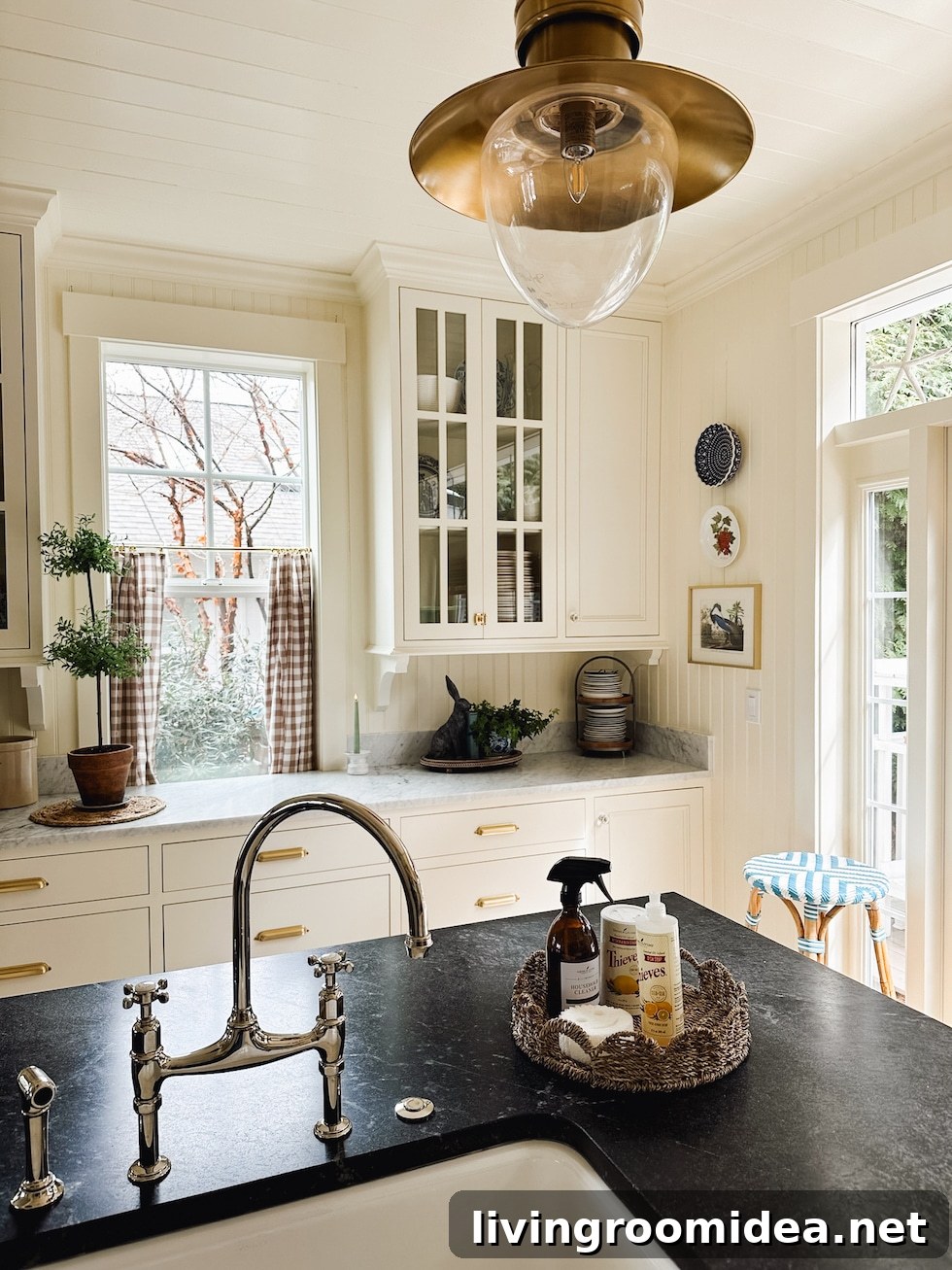
Spring cleaning is here, so I’m sharing favorite toxin-free cleaning tips to refresh your home from top to bottom. This season always inspires a deep clean, and I’ll walk you through practical hacks, recipes, and the basic kit I use for a truly clean—and safer—household.
Years ago I decided to remove as many toxic products from our home as possible, and I’ve never looked back. Living with an autoimmune condition taught me how much household and personal care products can affect health. Prioritizing non-toxic alternatives has made a real difference for our family.
I’ve written about the connection between our homes and well-being in my book and journal, exploring how intentional living spaces support health and peace.
After learning that certain household products can trigger symptoms, I changed how I define “clean.” True cleanliness is more than appearance—it means keeping toxic ingredients out of our living spaces. Over the years I’ve simplified our supplies to a few effective, concentrated products that do the job without filling cabinets with toxic bottles.
One versatile concentrated cleaner serves many purposes: countertops, sinks, floors, fabrics, and more. Because it’s concentrated, a small amount diluted in water is economical and long-lasting.
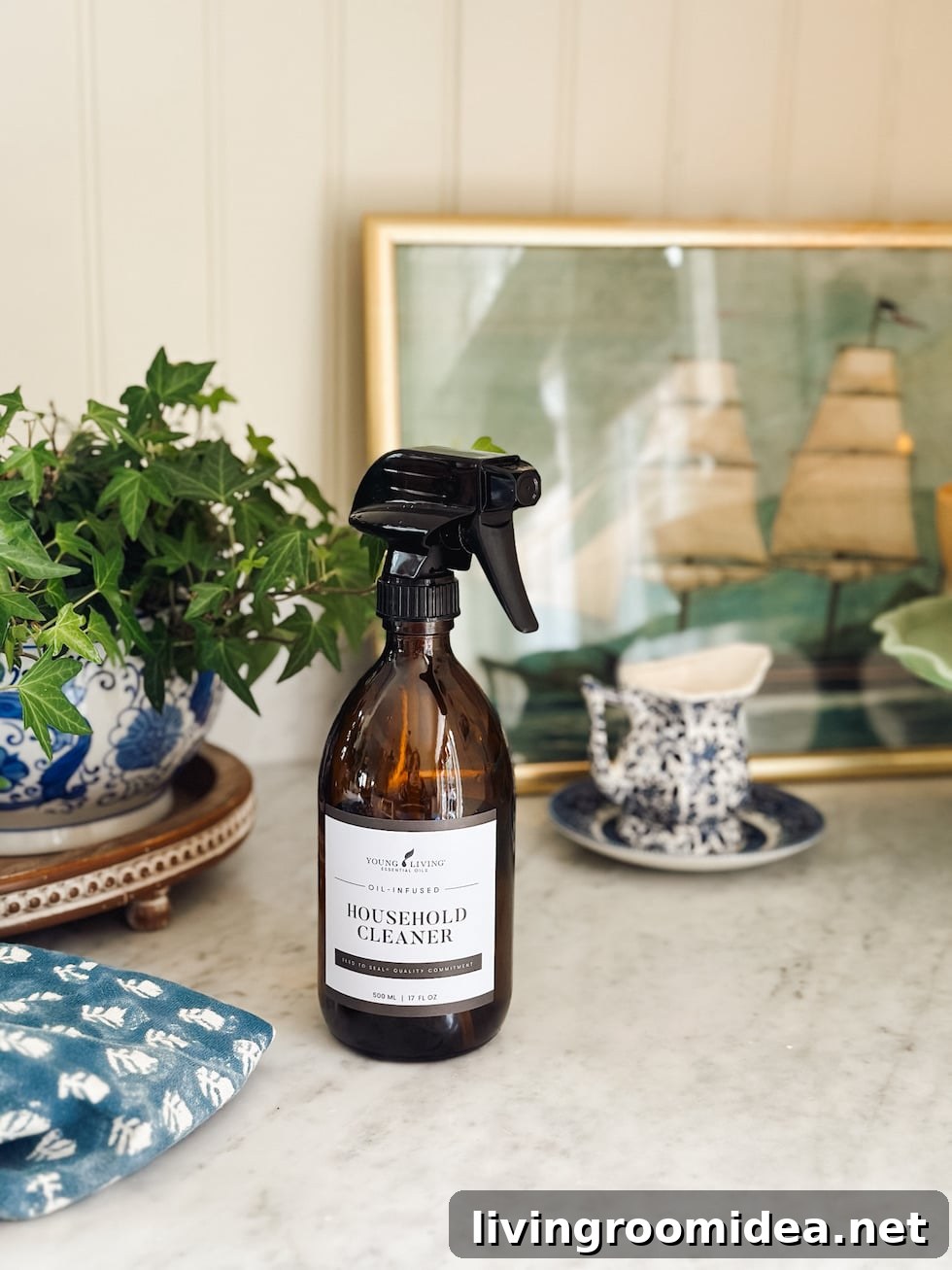
We keep our kitchen meticulously maintained. With marble and soapstone countertops in our new kitchen, I rely on gentle, non-toxic cleaners that preserve natural stone while removing grime and oils.
I’ll share a couple of especially helpful hacks for caring for marble and soapstone—simple steps that make maintenance easy.
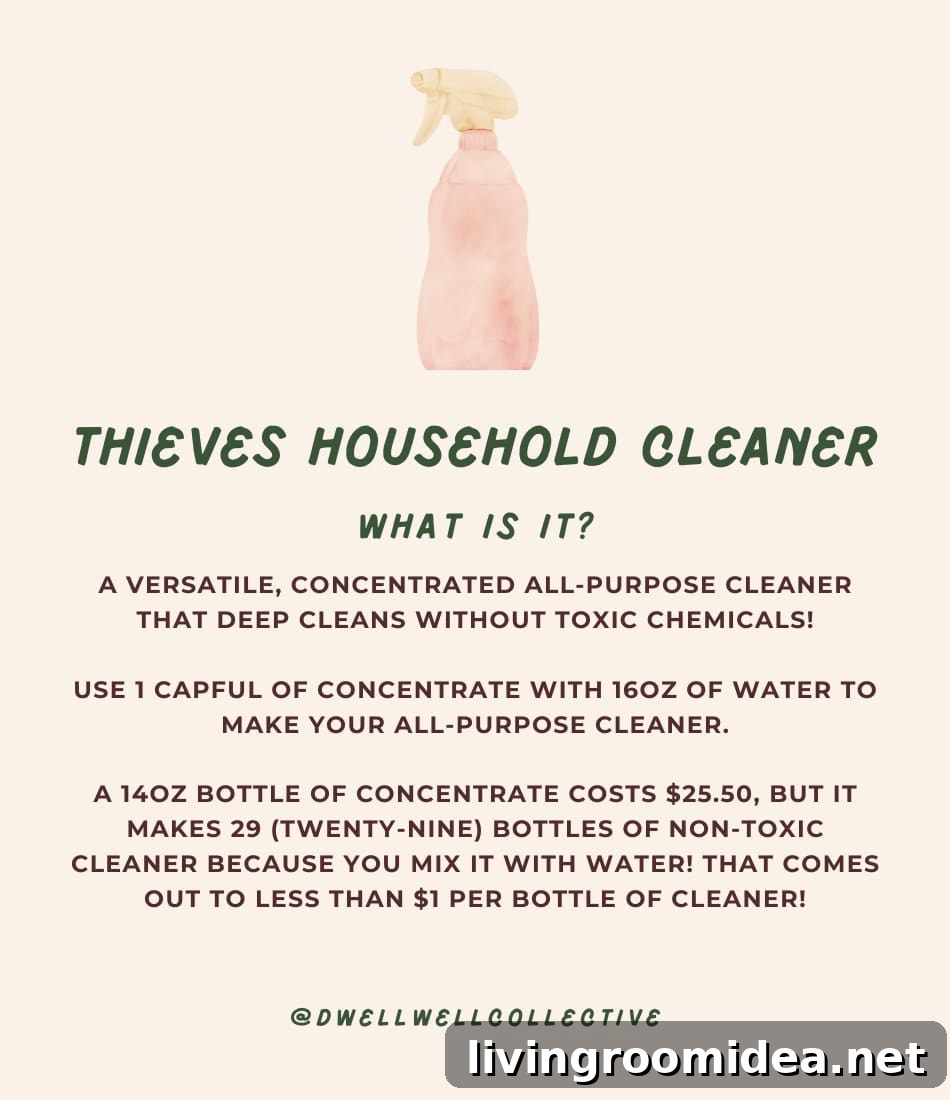
Simple ways to use a concentrated household cleaner
- Countertops and sinks: Mix 1–2 capfuls of cleaner with 16 oz of water in a spray bottle. For stubborn spots, make a paste with baking soda and the cleaner.
- Wood and tile floors: Combine 2 capfuls of cleaner with 1 gallon of warm water. Mop with a damp (not soaking) mop and test a small, hidden area first.
- Fabrics and rugs: Use diluted cleaner for spot cleaning on fabrics, leather, and rugs—always patch-test first to ensure colorfastness.
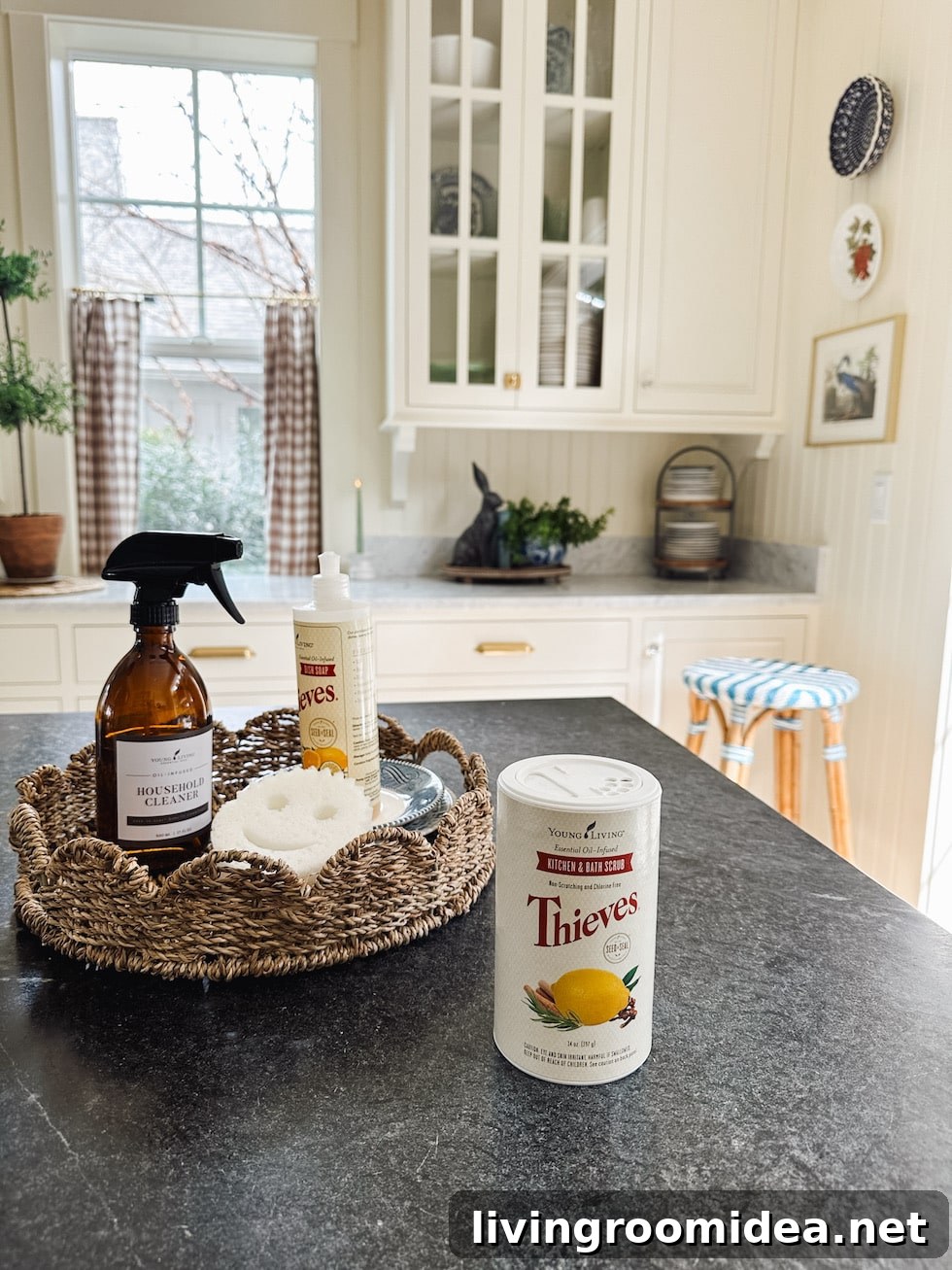
Soapstone cleaning hack
Thorough scrubbing paste works wonders on oil stains in soapstone. Our soapstone is left un-oiled to preserve its natural blue-green hue. When oils from hands or products darken the surface—around sinks or high-touch areas—a gentle scrub with a paste lifts the stains without harming the stone.
Because soapstone naturally darkens with oil, occasional cleaning to remove rings or fingerprints keeps it looking even and close to its original tone.
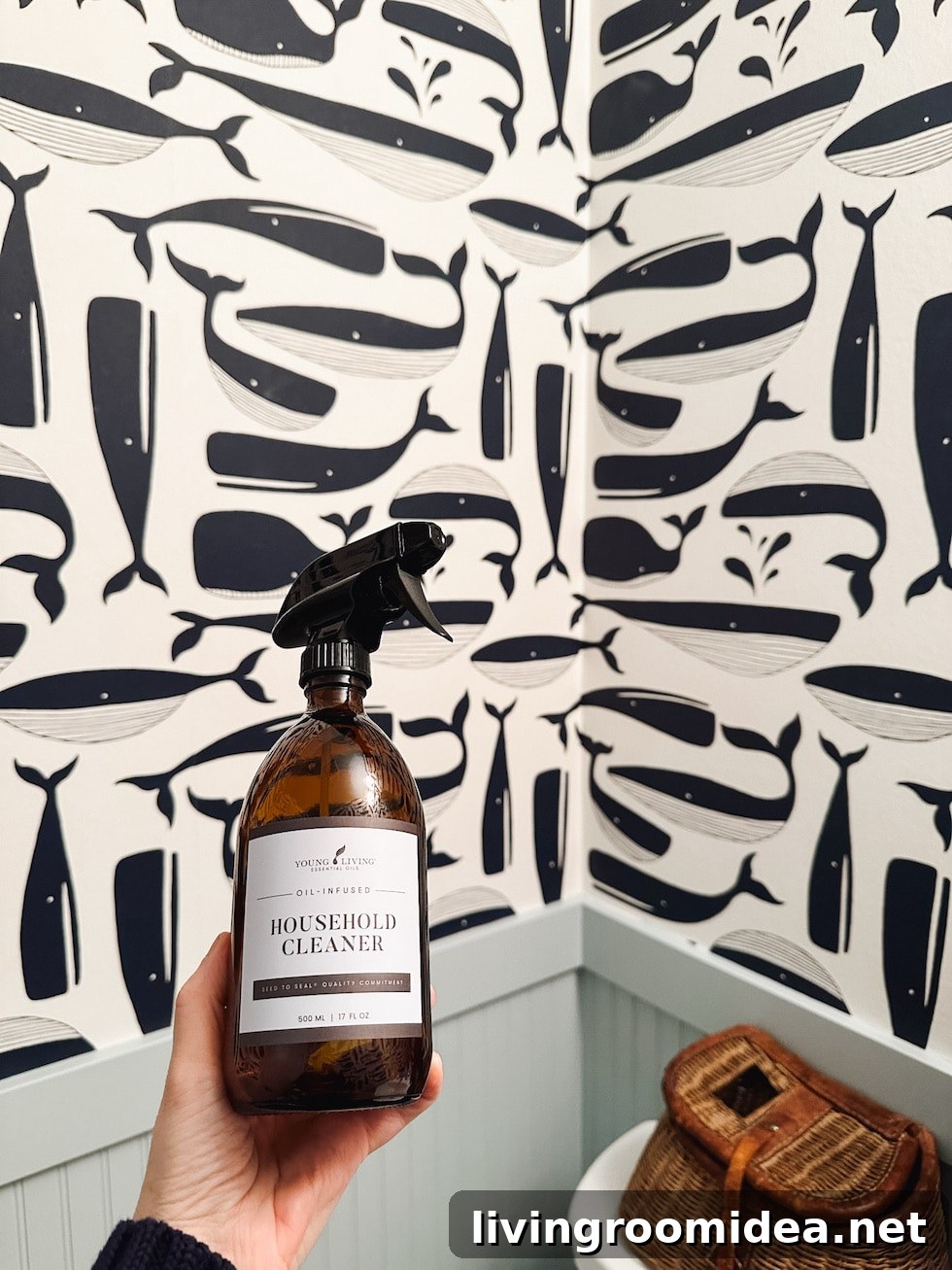
Scented household cleaners
Fragranced cleaners once appealed to me for their pleasant scents, but many synthetic fragrances are best avoided. A safer approach is to customize your cleaner with trusted essential oils: add a few drops to your diluted cleaner to create seasonal blends or a signature scent without harmful additives.
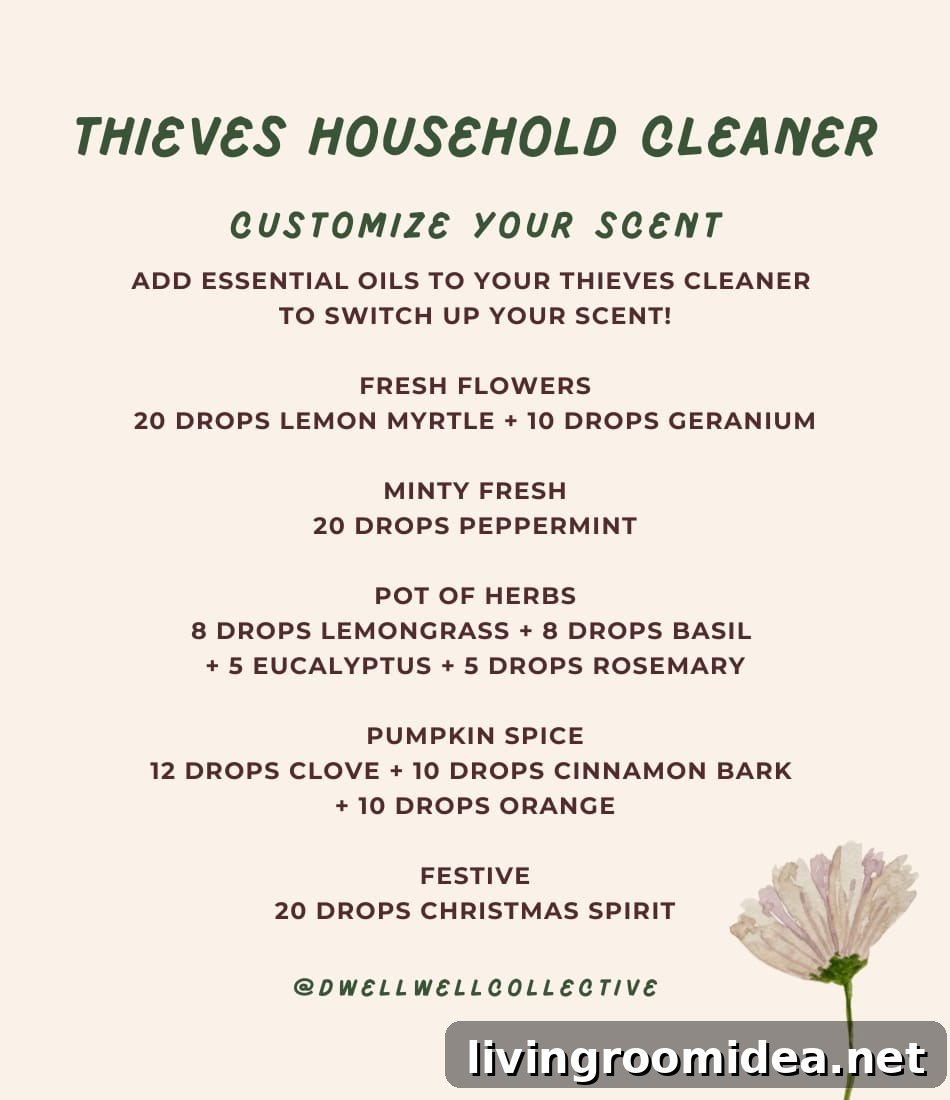
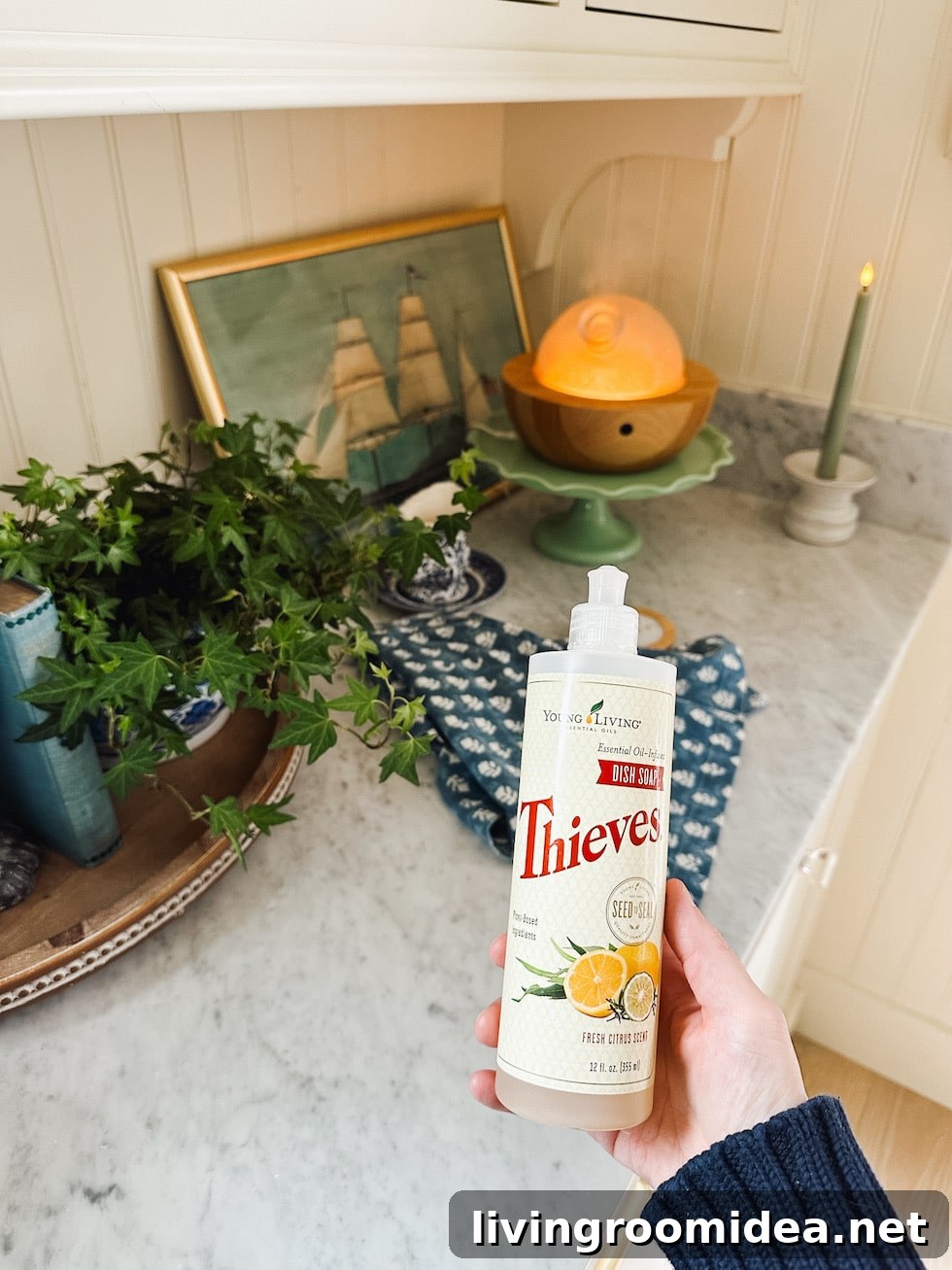
I also use a concentrated dish soap that we dilute with water to make it last longer. It’s gentle enough for dishes and effective on surfaces like marble when used correctly.
Marble cleaning hack
Marble is beautiful but can be sensitive, so care and prevention are key. We use sealed, honed Carrara marble and protect it with boards and mats for messy tasks. For occasional stains, a paste made from gentle dish soap and baking soda applied to the spot, covered with plastic wrap, and left overnight often lifts the stain. Wipe clean and repeat if necessary.
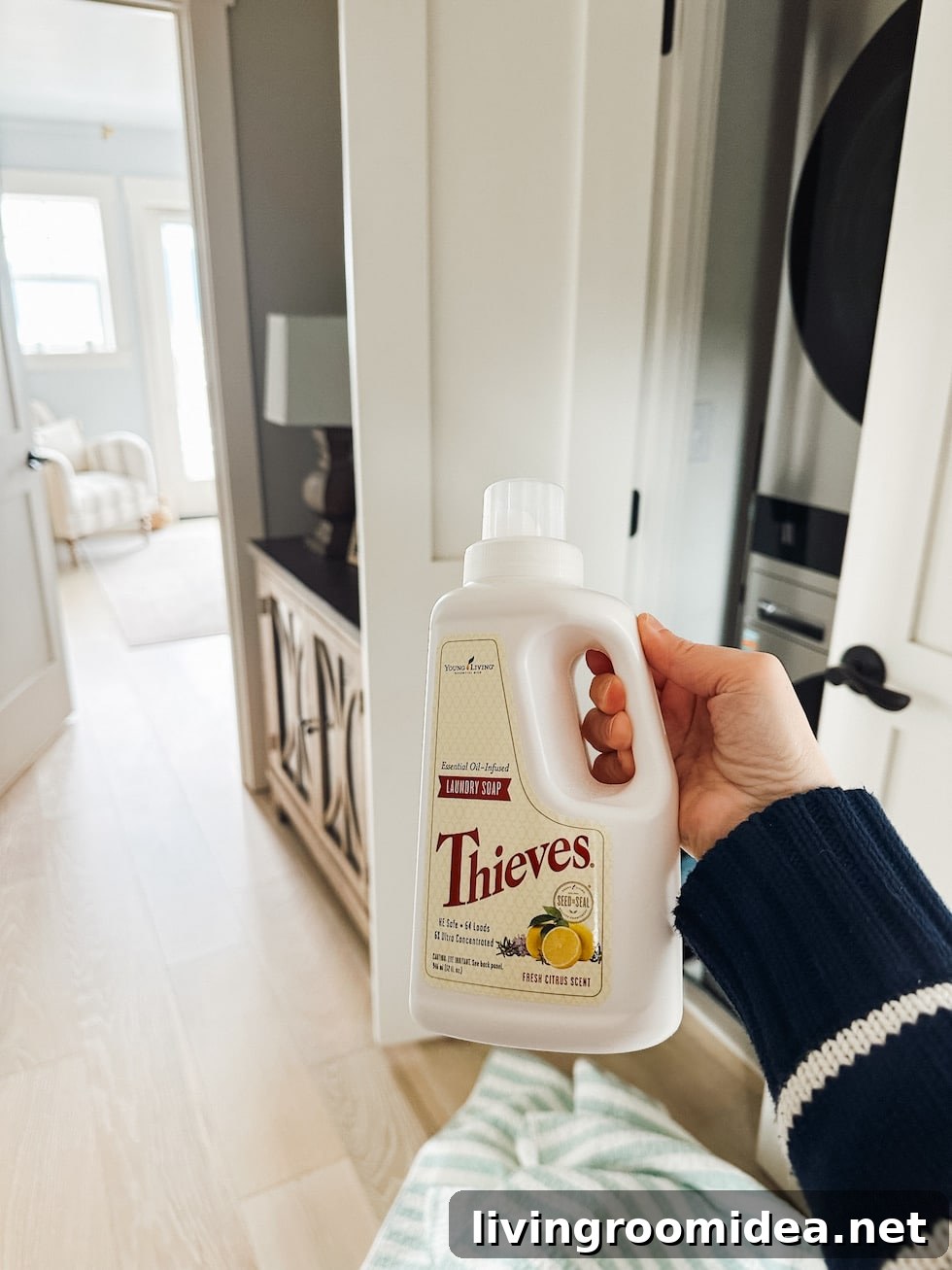
Laundry, cleaning, and stain recipes
A gentle, concentrated laundry detergent that’s formulated for sensitive skin is my go-to. We dilute it to extend its use. It cleans well and is kinder to skin than conventional detergents. For softening, we avoid dryer sheets and use wool dryer balls instead—an effective, non-toxic alternative.
Basic stain lift paste: baking soda + a small amount of concentrated dish soap; apply, cover, and let sit before rinsing.
All-purpose spray: 1–2 capfuls of concentrated cleaner + 16 oz water; add a few drops of essential oil for fragrance if desired.
Floor solution: 2 capfuls of cleaner + 1 gallon warm water; use sparingly on wood floors and test first.
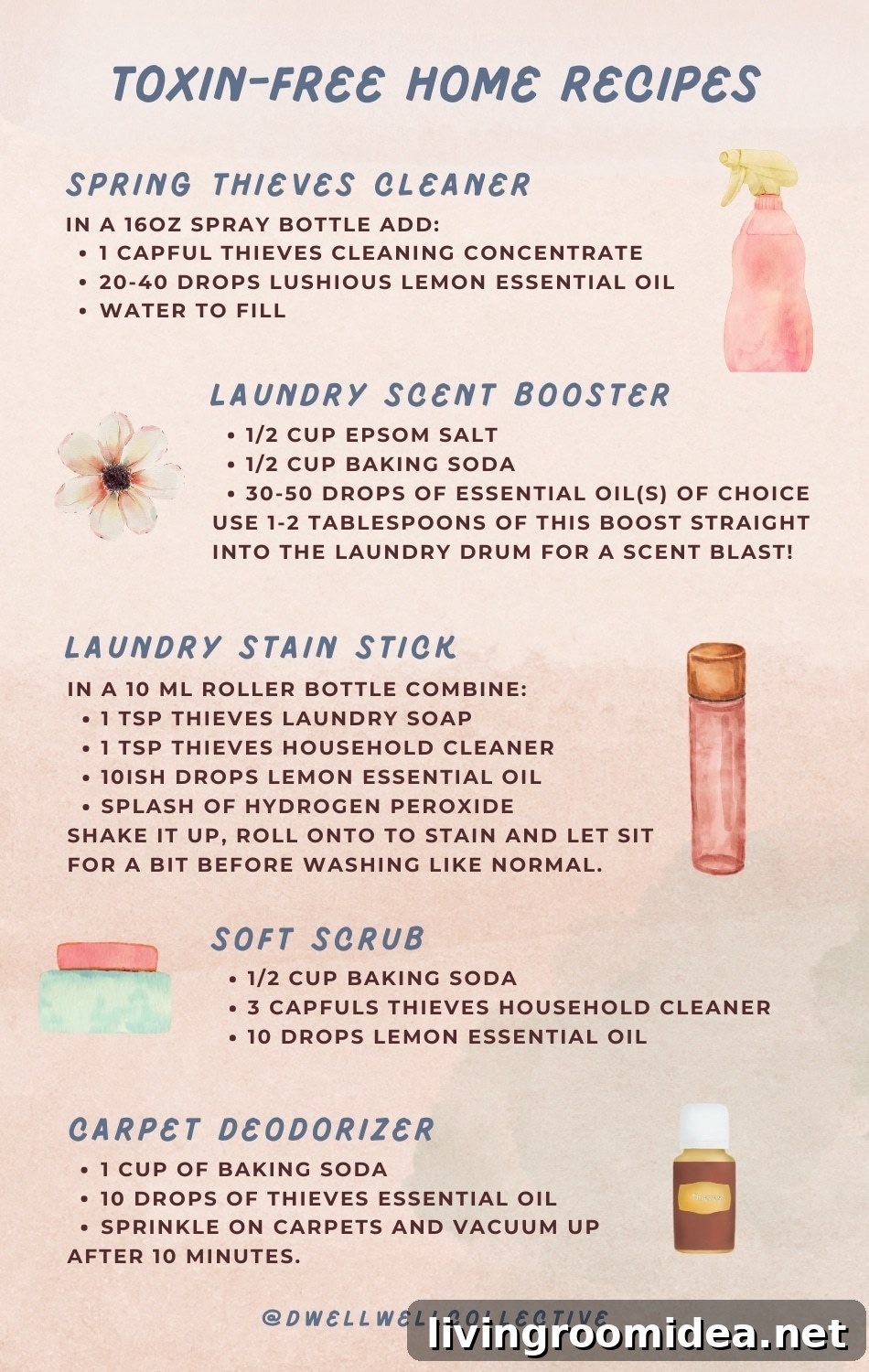
If you have questions about cleaning techniques, recipes, or choosing scents, I’m happy to help. Leave a comment or send a message and I’ll offer guidance tailored to your home and needs.

Grab a spring cleaning kit
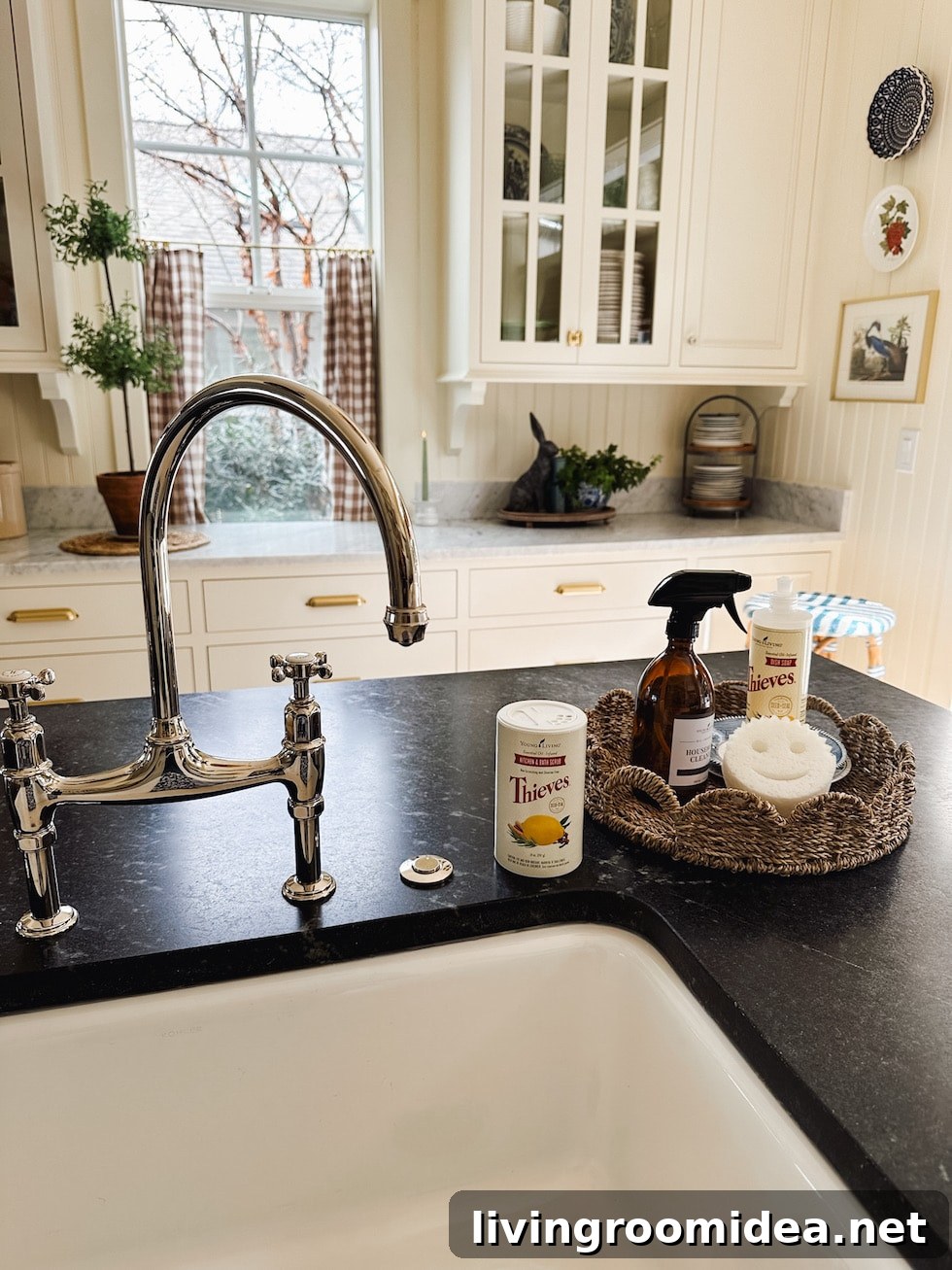
A starter kit with concentrated household cleaner, a scrub, dish soap, laundry soap, and a spray bottle simplifies switching to toxin-free cleaning. A curated kit saves time and ensures you have the basic tools to clean safely and effectively.
Ordering a thoughtful starter set also often includes recipes, tips, and access to a community of people who share cleaning and homecare advice—helpful resources when transitioning to new products and routines.
Happy spring cleaning!