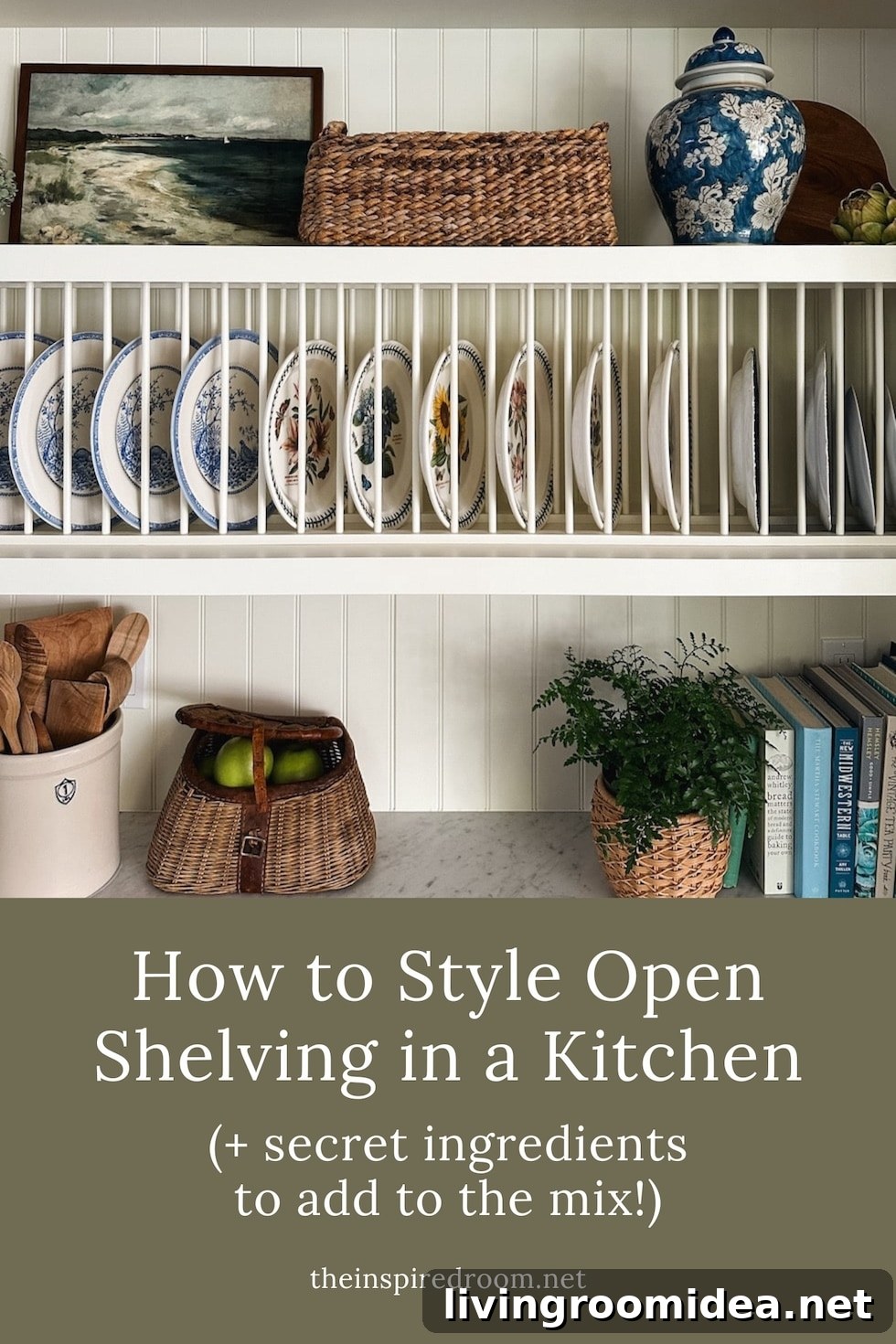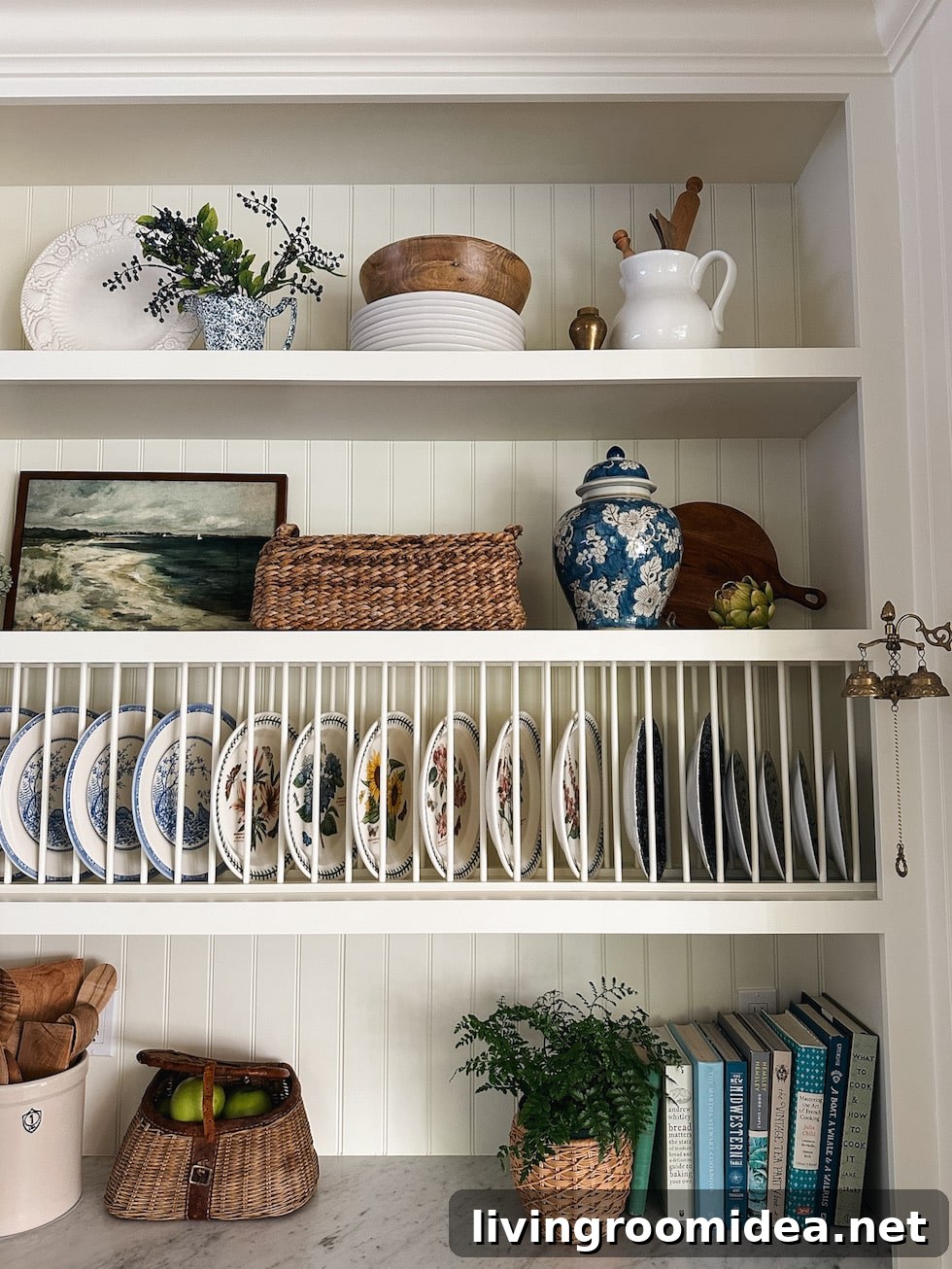
Styling shelves can feel intimidating, but with a few simple designer tips it becomes enjoyable and much less stressful. Knowing how to select the right pieces and arrange them will transform open shelving into a thoughtful display rather than clutter.
Below are reliable, practical tips for choosing items to display and arranging them on open kitchen shelves — principles that work well anywhere in the home.
Watch the short video below, then scroll for more tips.
Pair practical and pretty
I like to blend useful items with decorative pieces. Many items on display should be practical enough to use — stacks of plates, pitchers, baskets or crocks are great examples. When shelves hold items that are functional, they feel lived-in and approachable rather than staged.
Set the mood with a palette
Choosing a mood or color direction helps everything feel cohesive. A defined palette and texture story ties mismatched items together and gives the shelves a curated, intentional look.
A cohesive palette doesn’t require perfect matching or neutral-only choices. Instead, pick one or two dominant colors, add wood and white tones, and include a metal finish. Small accents of additional hues are fine and can add personality without overwhelming the composition.
Describe the vibe you want — serene, moody, cheerful, seasonal — and remove anything that distracts from that feeling. Being intentional about color and texture makes styling easier and more effective.
A simple formula I use:
Several shades of two colors + a wood tone + a white tone + a metal finish. Any extra colors appear in small doses.
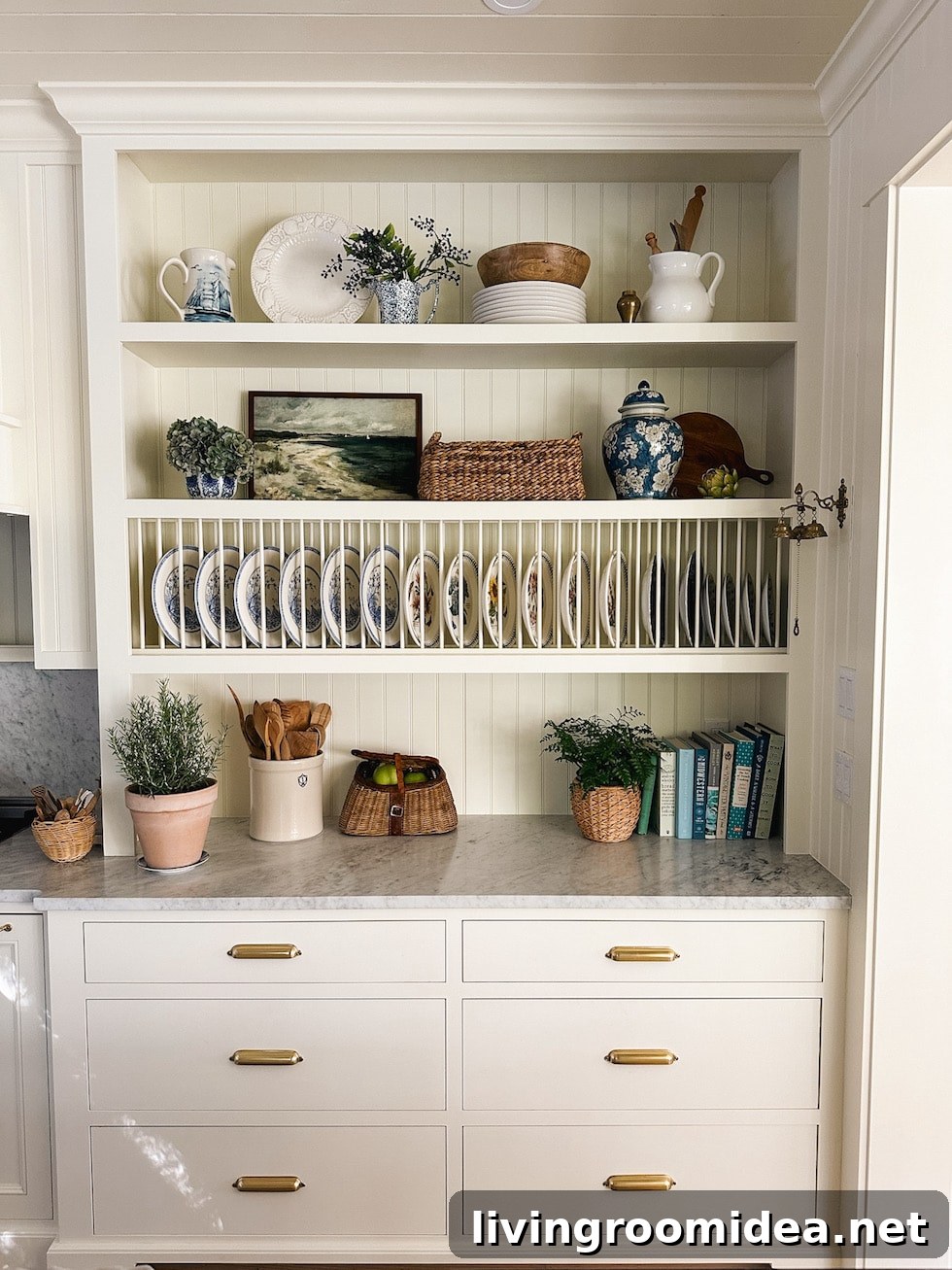
For example, the top shelves show blues and greens with mid-tone woods and whites, plus tiny pops of red and yellow found only in a few dishes. That restraint keeps the display balanced and visually calm.
Use unmatched and unexpected pieces
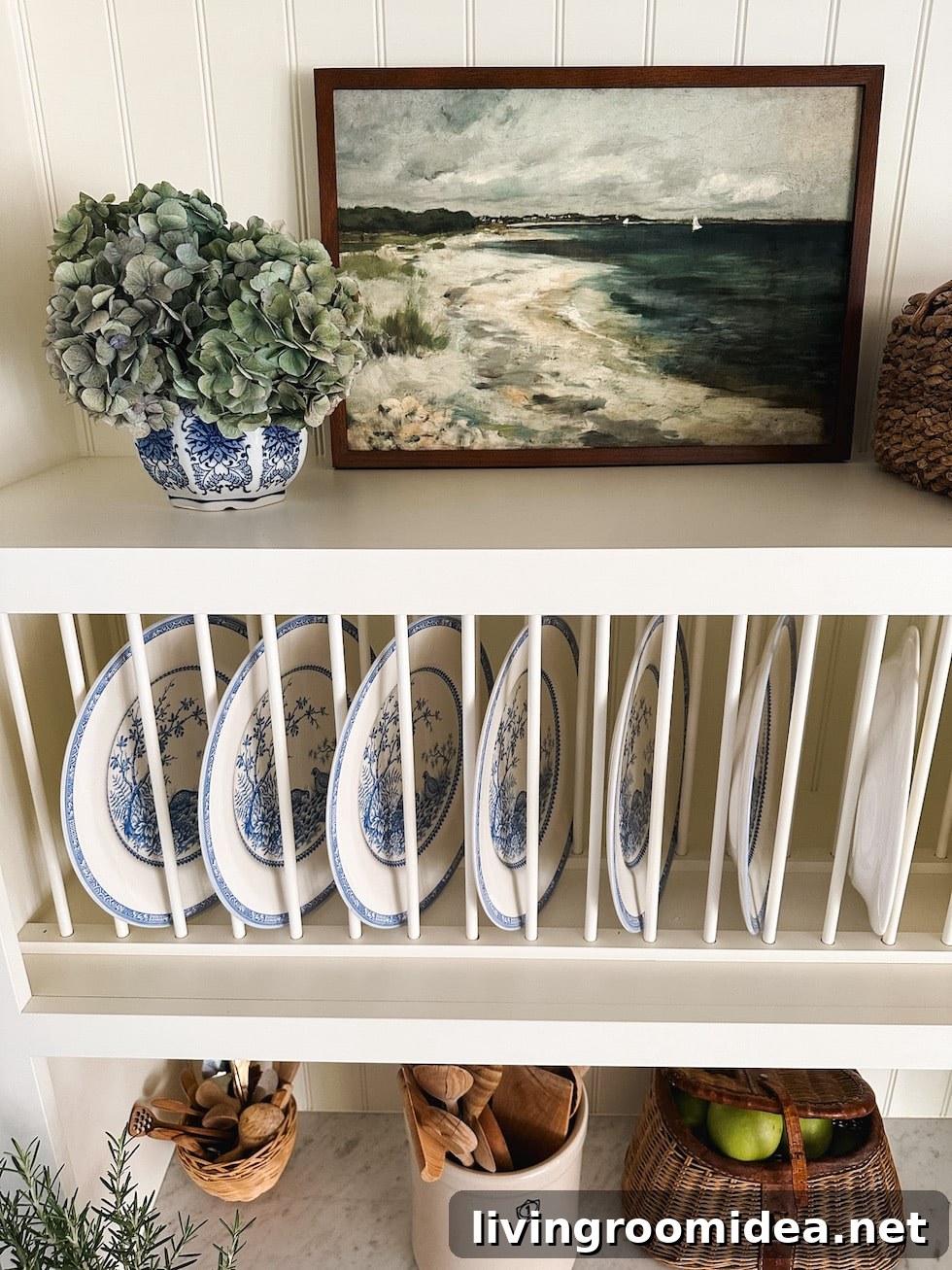
While a matching set makes a strong statement, mixing items that don’t match can feel more personal and flexible. Mismatched pieces work when they contribute to the chosen mood and color story, allowing you to showcase collections and change the look seasonally without replacing everything.
Include collected or vintage finds, textured objects, plants (real or faux), books, organic elements like stems or faux vegetables, baskets, artwork and vessels. These unexpected elements add charm and tell a story.
Blend a mix of sizes and shapes
Combine rounds, cylinders, rectangles and organic shapes to create visual interest. Use a few small items sparingly to add detail, but avoid overloading with too many tiny objects. A variety of sizes and shapes creates rhythm and balance.
Pair, lean and layer
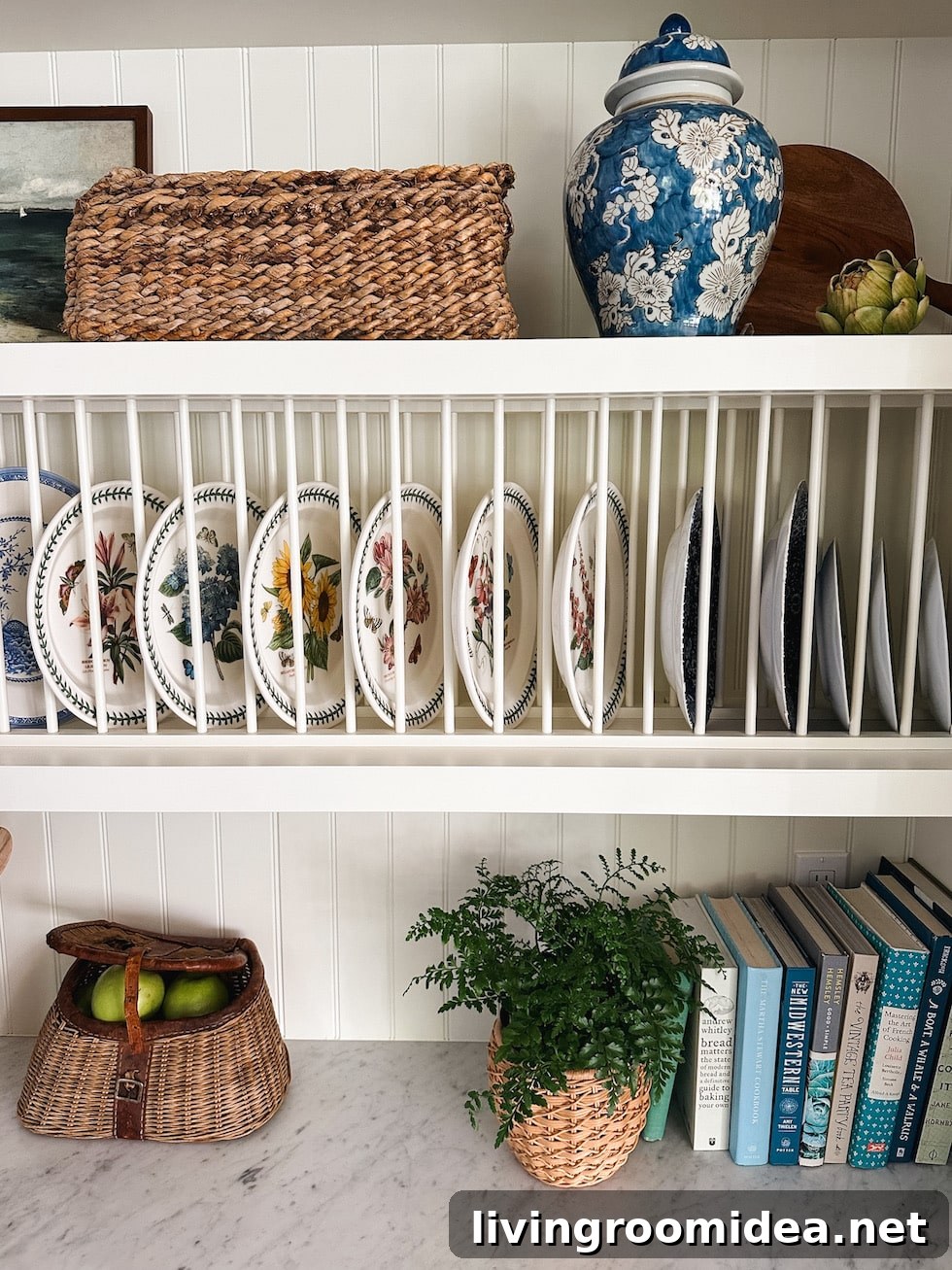
Make mismatched pieces feel intentional by pairing, leaning and layering. Start with taller items or artwork at the back, lean large platters or framed prints against the wall, then layer smaller items in front. Group in threes when possible, vary heights and leave breathing room so each grouping reads as deliberate.
Mix textures and color thoughtfully — for instance, display fruit in a woven basket to combine function and visual interest.
Step back and evaluate
After arranging, step back and view the shelves from different angles and from across the room. If the display feels cluttered, remove or relocate a few items. If it feels sparse, add a piece that repeats a color or texture already present. Adjust until the arrangement feels natural and balanced with the rest of the room.
If you enjoy seeing behind-the-scenes home details, consider joining a community of home lovers where I share decorating and homemaking tips in real time. It’s a place to ask questions and get practical help while you create a sanctuary you love.
Related post: How to get the look of a Nancy Meyers kitchen — tips and inspiration to create a warm, timeless kitchen aesthetic.

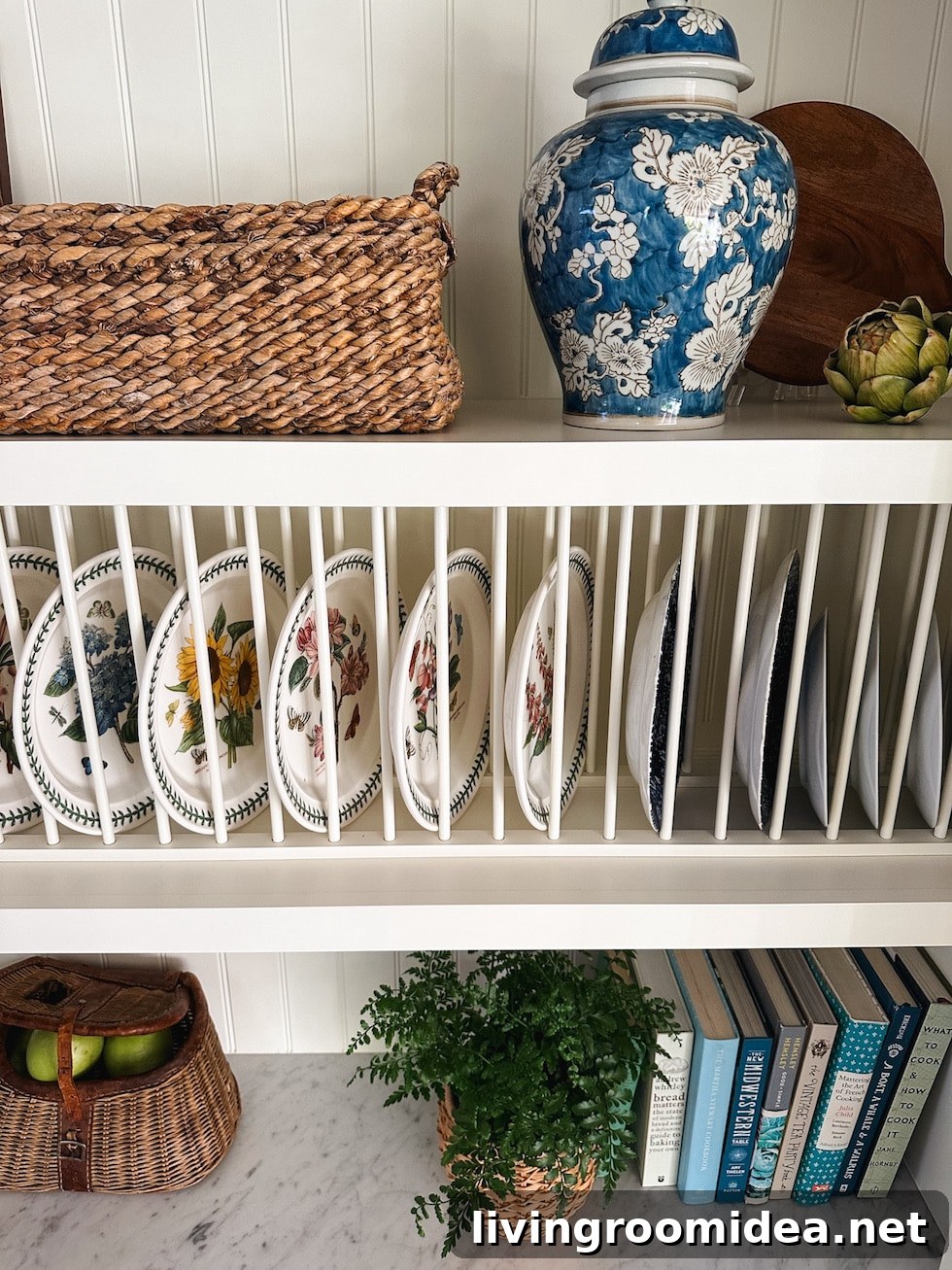
Botanical plates, brass bells, chinoiserie ginger jar, seascape art print in a wood frame, blue and white plates, stoneware crock, favorite cookbooks, artificial artichoke, blue and white planter pot, basket with apples — these are the kinds of items that bring personality and purpose to open shelving.
Paint color shown: Classic Light Buff (Sherwin Williams).
Pin this post for later and use these principles as a starting point: choose a mood, limit your palette, mix practical and pretty, vary shapes and sizes, and layer thoughtfully. The result will be shelves that feel calm, curated and lived-in.