Images: This Old House
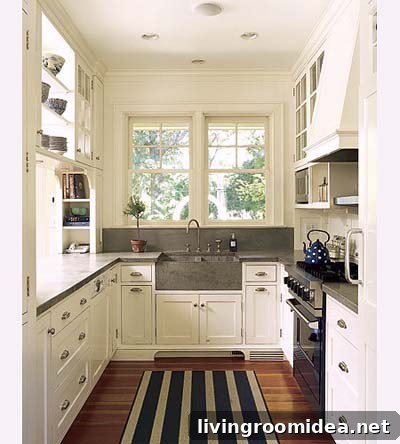
I recently came across three photos of white kitchens featuring striped rugs on the This Old House site. The combination is simple but striking: the clean, bright backdrop of a white kitchen paired with the bold graphic pattern of stripes.
White kitchens are timeless. Their light, reflective surfaces make a space feel larger and more open, while acting as a neutral canvas for other design elements. A striped rug introduces contrast, movement, and personality without overwhelming that calm, airy feeling. Whether the stripes are narrow or wide, neutral or high-contrast, they instantly add visual interest and help define the floor plane.
These images show different ways to use stripes in a kitchen setting. One example pairs a classic black-and-white runner with subway tile and white cabinetry for a crisp, modern look. Another uses a softer, low-contrast striped rug to warm an all-white farmhouse-style kitchen, balancing the coolness of white surfaces with texture. A third photo demonstrates how a bold striped runner can guide the eye down a galley kitchen, creating a sense of flow and elongation.
A striped rug can serve several practical purposes as well. It cushions and protects flooring in high-traffic zones, defines work and dining areas, and hides minor scuffs better than a solid light-colored floor. Choose a durable material suitable for kitchen use—rag rugs, flatweave cotton, or indoor-outdoor synthetics work well and are easy to clean.
When selecting a stripe pattern, consider scale and color. Narrow stripes read as a subtle texture from a distance; wide stripes make a stronger statement. High-contrast stripes—black and white, navy and white, or charcoal and cream—create a graphic, contemporary vibe. Low-contrast combinations—soft gray on white or beige on cream—lend a quieter, more organic feel.
Placement matters. A runner along an island or in front of the sink helps protect the most used paths and visually anchors the workspace. A larger rug under a small dining table can create a cozy nook within an open-plan kitchen. Be mindful of slip resistance and choose rugs with a textured weave or a non-slip pad underneath.
Styling a striped rug in a white kitchen is about balance. Keep the rest of the palette simple so the stripes can shine without competing with loud finishes. Add a few coordinating accents—textiles, dishware, or a single painted accessory—to tie the look together. The result is a kitchen that feels fresh, intentional, and inviting.